Businesses are constantly searching for innovative ways to increase brand awareness, reach potential customers, and create new revenue opportunities. Traditional advertising remains useful, but digital platforms have introduced more flexible and measurable marketing opportunities. Digital Sponsorship has become an effective strategy that allows businesses to connect with online audiences through sponsored content, events, influencers, digital communities, and industry collaborations.
Unlike conventional sponsorship arrangements, digital sponsorship uses online channels to create meaningful connections between brands and their target audiences. Businesses can support relevant content creators, sponsor industry events, collaborate with online communities, and promote their products or services through digital platforms. These activities help organizations improve visibility while building relationships with customers and potential business partners.
A well-planned sponsorship strategy can also improve Sponsorship ROI, strengthen Sponsorship Promotion, and create valuable Sponsorship Partnerships. By choosing relevant sponsorship opportunities and measuring campaign performance, businesses can turn digital collaborations into long-term growth opportunities.
Understanding the Importance of Digital Sponsorship
Digital sponsorship refers to a marketing arrangement in which a business provides financial support, products, services, or other resources to an online platform, event, creator, organization, or digital initiative in exchange for brand exposure and promotional opportunities.
It allows companies to introduce their brands to audiences who already follow specific creators, communities, websites, and digital events. This approach can help businesses reach relevant customers without depending entirely on traditional advertising channels.
How Digital Sponsorship Works
Digital sponsorship usually involves an agreement between a sponsoring brand and a sponsored individual, organization, or platform. The sponsoring business receives promotional opportunities, while the sponsored partner receives financial or other forms of support.
For example, a technology company may sponsor a software development webinar and receive brand placement, promotional mentions, and opportunities to interact with participants. This arrangement creates value for both parties.
Why Businesses Are Investing in Digital Sponsorship
Businesses are increasingly interested in digital sponsorship because it provides access to specific audiences and measurable marketing opportunities. Companies can select sponsorship channels based on their industry, target customers, and marketing objectives.
Digital campaigns also offer flexibility in terms of budget, content format, audience selection, and campaign duration. This makes sponsorship accessible to both small businesses and larger organizations.
Increasing Brand Awareness Through Digital Sponsorship
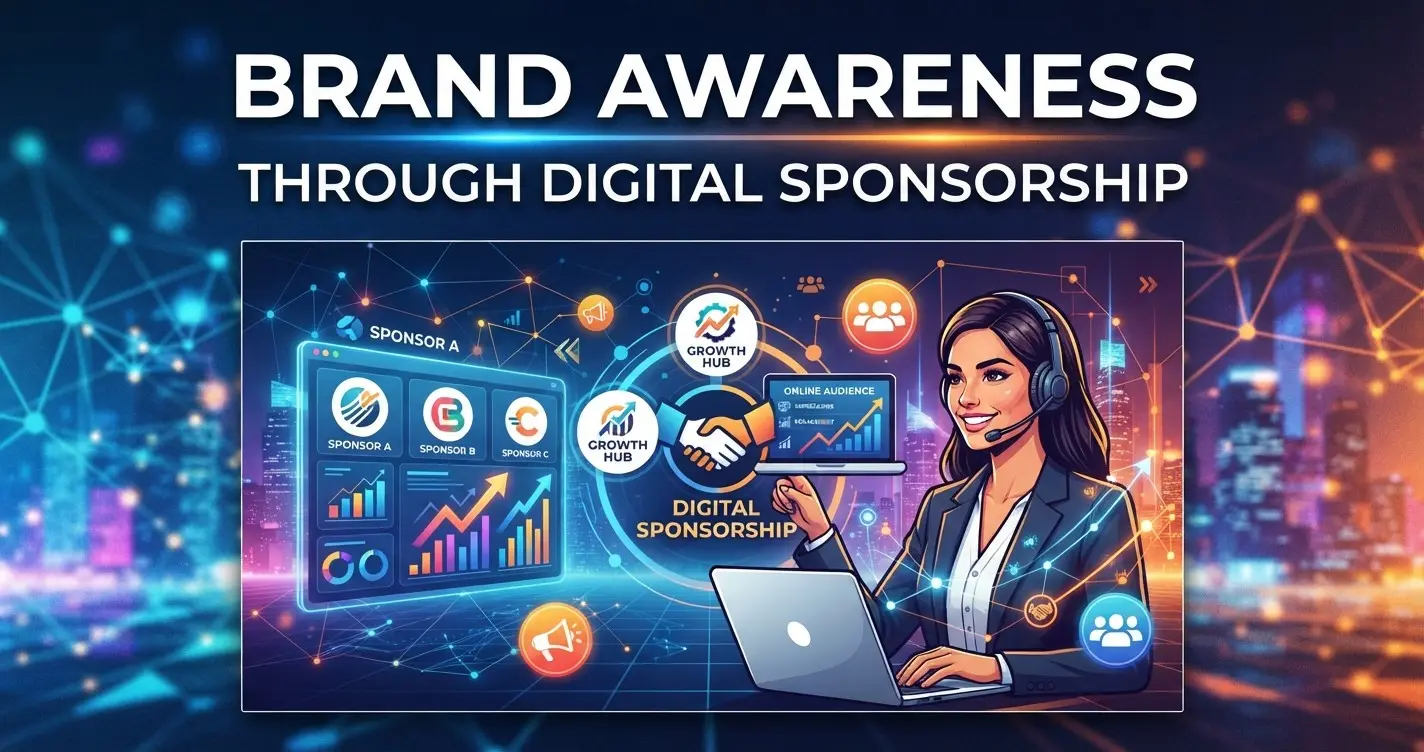 Brand awareness plays an important role in business development. Customers are more likely to consider products and services from brands they recognize and trust. Digital sponsorship helps businesses introduce their names, products, and services to audiences through relevant online platforms.
Reaching Targeted Online Audiences
One major advantage of digital sponsorship is the ability to reach audiences based on their interests and online activities. Businesses can sponsor industry-specific websites, podcasts, webinars, social media creators, and professional communities.
For example, a fitness equipment company can sponsor fitness influencers or online workout events to reach people interested in health and exercise. This approach makes brand exposure more relevant than general promotional campaigns.
Building Consistent Brand Recognition
Repeated exposure helps audiences become familiar with a business. Through sponsored videos, newsletters, digital events, and social media campaigns, companies can maintain visibility across different online channels.
Consistent brand presentation also helps customers associate a company with particular products, services, or industry expertise. Over time, this recognition can support customer trust and purchasing decisions.
Creating Valuable Sponsorship Partnerships
Digital sponsorship creates opportunities for businesses to develop relationships with content creators, publishers, event organizers, industry professionals, and other organizations.
These relationships can extend beyond individual promotional campaigns. Businesses can establish long-term collaborations that support audience development, content distribution, and shared marketing objectives.
Identifying the Right Sponsorship Partners
Choosing appropriate partners is essential for successful sponsorship campaigns. Businesses should evaluate whether a potential partner’s audience, content, reputation, and values align with their brand.
For example, a cybersecurity company may benefit from partnering with technology educators, software communities, or industry-focused podcasts. Such collaborations provide opportunities to communicate with audiences who are already interested in relevant topics.
Developing Long-Term Sponsorship Partnerships
Strong Sponsorship Partnerships are built on shared objectives, transparency, and mutual benefits. Instead of focusing only on short-term brand exposure, businesses should consider relationships that can create continued value.
A company might sponsor multiple educational webinars organized by the same technology community. Over time, repeated participation can strengthen brand recognition and establish a stronger connection with the audience.
Long-term partnerships can also create opportunities for joint content, exclusive offers, product demonstrations, and collaborative events.
Improving Marketing Performance Through Sponsorship Promotion
 Effective promotion determines how successfully a sponsorship campaign communicates its message to the target audience. Businesses should develop promotional strategies that highlight the partnership while providing useful information to potential customers.
Using Multiple Digital Channels
Businesses can promote sponsorship activities through websites, social media platforms, email newsletters, blogs, and digital advertising channels.
For example, a company sponsoring an online business conference can publish announcement posts, share event updates, create promotional videos, and distribute registration information through email campaigns.
Using multiple channels increases the opportunities for audiences to discover the sponsorship and interact with the brand.
Creating Engaging Sponsorship Promotion Campaigns
Sponsorship Promotion becomes more effective when businesses create content that audiences find valuable. Instead of publishing only promotional messages, companies can share educational videos, expert interviews, event highlights, and practical resources connected to the sponsored activity.
This approach gives audiences a reason to interact with sponsored content while helping brands communicate their expertise.
Businesses should also maintain consistent branding across promotional materials to ensure that audiences can easily recognize the sponsoring organization.
Expanding Business Reach Through Influencer and Content Creator Sponsorships
Content creators and influencers have developed strong relationships with their audiences through regular communication and specialized content. Businesses can use these existing relationships to introduce their products and services to relevant online communities.
Influencer sponsorships can include sponsored videos, product demonstrations, educational posts, podcast mentions, and collaborative campaigns.
Connecting With Relevant Content Creators
Businesses should evaluate creators based on audience relevance, content quality, engagement, and credibility rather than follower numbers alone.
A creator with a smaller but highly interested audience may generate more valuable interactions than someone with a large audience that has limited interest in the sponsored product.
Companies should also review previous sponsored content to understand whether a creator’s communication style and reputation align with their brand identity.
Encouraging Authentic Brand Communication
Authenticity is important when businesses work with content creators. Sponsored content should communicate genuine product information and provide clear value to audiences.
Creators should have enough flexibility to present the sponsored product in their natural communication style while following the agreed campaign guidelines.
This balance helps businesses maintain brand consistency without making promotional content feel unnecessarily forced.
Generating New Revenue and Business Opportunities
Digital sponsorship can contribute to business growth by creating opportunities to attract customers, generate qualified leads, and develop commercial relationships.
When businesses connect with audiences through relevant sponsored activities, they can introduce their services to people who may have an existing interest in their offerings.
Attracting Potential Customers
Sponsored webinars, online workshops, digital events, and educational content can introduce businesses to potential customers.
For example, a marketing agency sponsoring a business growth webinar can share its expertise with entrepreneurs who may need professional marketing services.
Providing useful information during these activities helps businesses establish credibility and encourage interested participants to explore their services.
Creating Opportunities for Cross-Promotion
Cross-promotion allows sponsoring businesses and their partners to introduce each other’s brands to relevant audiences. A software company and a business education platform, for example, can collaborate on educational campaigns that introduce their respective services to entrepreneurs. These collaborations can increase exposure, generate referrals, and create additional opportunities for business development.
Measuring Sponsorship ROI and Campaign Effectiveness
 Businesses need to measure sponsorship performance to understand whether their investment is producing meaningful results. Evaluating campaign outcomes helps organizations identify successful channels, improve promotional activities, and make informed marketing decisions.
Understanding Sponsorship ROI
Sponsorship ROI refers to the value a business receives from its sponsorship investment compared with the resources spent on the campaign.
Companies can evaluate ROI through financial outcomes, qualified leads, website traffic, customer acquisition, brand visibility, and audience engagement.
For example, if a business invests in sponsoring an online conference, it can monitor registration activity, website visits, inquiries, and sales opportunities generated through the campaign. Not every sponsorship produces immediate revenue. Some campaigns create long-term value through brand recognition and relationship development, which should also be considered during evaluation.
Tracking Important Performance Indicators
Businesses should establish measurable objectives before launching sponsorship campaigns. They can use website analytics, campaign tracking links, social media insights, and lead management systems to evaluate performance.
Comparing campaign results against initial objectives helps businesses understand whether the sponsorship reached the intended audience and generated meaningful interactions. Regular reporting also makes it easier to improve future sponsorship investments.
Using Digital Sponsorship to Strengthen Customer Engagement
Customer engagement helps businesses develop stronger relationships with their audiences. Digital sponsorship provides opportunities for customers to interact with brands through events, online discussions, sponsored content, and exclusive experiences.
These interactions can make marketing activities more memorable and encourage customers to remain connected with a business.
Organizing Interactive Sponsored Events
Businesses can sponsor webinars, virtual conferences, online competitions, and educational sessions that encourage audience participation.
For example, a technology brand can sponsor a webinar where industry experts discuss emerging technologies and answer audience questions.
Such activities allow companies to connect with participants while providing information that supports their interests and professional development.
Creating Exclusive Customer Experiences
Exclusive digital experiences can increase audience interest in sponsored campaigns. Businesses may offer special resources, product demonstrations, early access to services, or educational sessions through sponsorship collaborations.
These opportunities provide additional value to customers and help companies differentiate their brands from competitors.
Overcoming Common Digital Sponsorship Challenges
Although digital sponsorship offers several growth opportunities, businesses must carefully manage potential challenges. Choosing an unsuitable partner, setting unclear campaign objectives, and failing to measure results can reduce sponsorship effectiveness.
Companies should conduct proper research before entering sponsorship agreements. They need to understand the partner’s audience, content quality, reputation, and promotional capabilities.
Another challenge involves maintaining transparency. Sponsored content should be clearly disclosed according to applicable advertising rules and platform policies. This helps audiences understand commercial relationships and supports brand credibility.
Building a Sustainable Digital Sponsorship Strategy
A sustainable digital sponsorship strategy requires clear business objectives, relevant partnerships, consistent promotional activities, and regular performance evaluation. Businesses should begin by identifying their target audiences and determining which digital platforms or sponsored activities can reach them effectively. They should then select partners whose audiences and values align with their marketing goals.
Campaign planning should include realistic budgets, measurable performance indicators, and clearly defined expectations for both parties. Businesses should also evaluate results after each campaign to identify opportunities for improvement. Maintaining successful relationships is equally important. Companies that communicate regularly with their sponsorship partners can discover new collaboration opportunities and develop campaigns that deliver continued value.
Conclusion
Digital sponsorship has become a valuable strategy for businesses seeking to increase brand awareness, connect with targeted audiences, and develop new growth opportunities. Through influencer collaborations, sponsored events, content promotion, and strategic partnerships, companies can introduce their brands to relevant online communities and strengthen customer relationships.
Successful campaigns require careful partner selection, authentic communication, and consistent performance measurement. Businesses should also focus on delivering value to audiences rather than relying exclusively on promotional exposure.
By improving Sponsorship ROI, developing effective Sponsorship Promotion, and building meaningful Sponsorship Partnerships, organizations can turn digital sponsorship into a powerful marketing strategy that supports long-term business growth.
Frequently Asked Questions (FAQs)
1. What is digital sponsorship?
Digital sponsorship is a marketing arrangement in which a business supports an online platform, event, content creator, or organization in exchange for brand exposure, promotional opportunities, or other agreed benefits.
2. How does digital sponsorship help businesses grow?
It helps businesses increase brand awareness, reach targeted audiences, generate leads, develop partnerships, and create new revenue opportunities through online promotional activities.
3. What are the most common types of digital sponsorship?
Common types include influencer sponsorships, podcast sponsorships, sponsored webinars, virtual event sponsorships, newsletter sponsorships, and sponsored digital content.
4. How can businesses find the right sponsorship partners?
Businesses should evaluate potential partners based on audience relevance, industry alignment, engagement levels, content quality, reputation, and campaign objectives.
5. What is Sponsorship ROI?
Sponsorship ROI measures the value generated from a sponsorship investment compared with its cost. Businesses can evaluate it through leads, sales, website traffic, engagement, and brand awareness.
6. How can businesses promote digital sponsorship campaigns?
Businesses can use social media, email marketing, sponsored content, websites, influencer collaborations, and digital advertising to increase campaign visibility and audience participation.
7. Why are sponsorship partnerships important?
Sponsorship partnerships help businesses build professional relationships, reach new audiences, share resources, and create collaborative marketing opportunities that support long-term growth.
8. Can small businesses benefit from digital sponsorship?
Yes. Small businesses can sponsor niche creators, local online events, industry newsletters, and relevant digital communities to increase brand visibility without requiring large marketing budgets.
9. How can businesses measure digital sponsorship success?
Businesses can track website visits, audience engagement, referral traffic, qualified leads, conversions, customer acquisition, and overall sponsorship ROI.
10. What makes a digital sponsorship campaign successful?
A successful campaign combines relevant partners, clear objectives, engaging promotional content, authentic communication, measurable results, and long-term relationship development.