Growing a successful business requires more than traditional advertising and promotional activities. Companies need effective strategies to reach new audiences, build credibility, and develop meaningful relationships with other organizations. Partnership Marketing provides an opportunity for businesses to achieve these goals by collaborating with complementary brands, influencers, sponsors, and industry partners. Through shared resources, coordinated promotions, and mutually beneficial campaigns, companies can expand their market presence and create new growth opportunities.
A well-planned partnership can introduce a brand to audiences that may otherwise be difficult to reach. Businesses can also strengthen their reputation by working with trusted partners who share similar values and customer interests. Effective Sponsor Engagement helps maintain valuable relationships between brands and sponsors, while Influencer Sponsorship creates opportunities to connect with targeted audiences through influential content creators. Similarly, well-executed Sponsorship Campaigns can improve visibility and encourage meaningful audience participation. By developing strategic collaborations, businesses can increase brand awareness, attract potential customers, and support long-term growth.
Understanding Partnership Marketing
Partnership marketing is a business strategy in which two or more organizations collaborate to promote their products, services, or brands. These partnerships are generally designed to create mutual benefits by combining marketing resources, industry knowledge, audiences, and promotional opportunities.
How Partnership Marketing Works
Partnership marketing works through collaboration between businesses that have compatible objectives and complementary audiences. Each partner contributes resources, expertise, promotional channels, or other forms of support to achieve shared marketing goals.
For example, a fitness brand may collaborate with a sports equipment company to promote products that appeal to health-conscious customers. Both businesses can benefit from increased exposure while providing relevant value to their audiences.
Why Businesses Choose Marketing Partnerships
Businesses choose partnerships because they can expand their reach without depending entirely on individual marketing activities. Working with established brands or industry professionals can also improve credibility and create access to new customer segments.
Partnerships allow organizations to share campaign responsibilities, exchange expertise, and develop promotional activities that may be more effective than independent efforts.
How Partnership Marketing Increases Brand Awareness
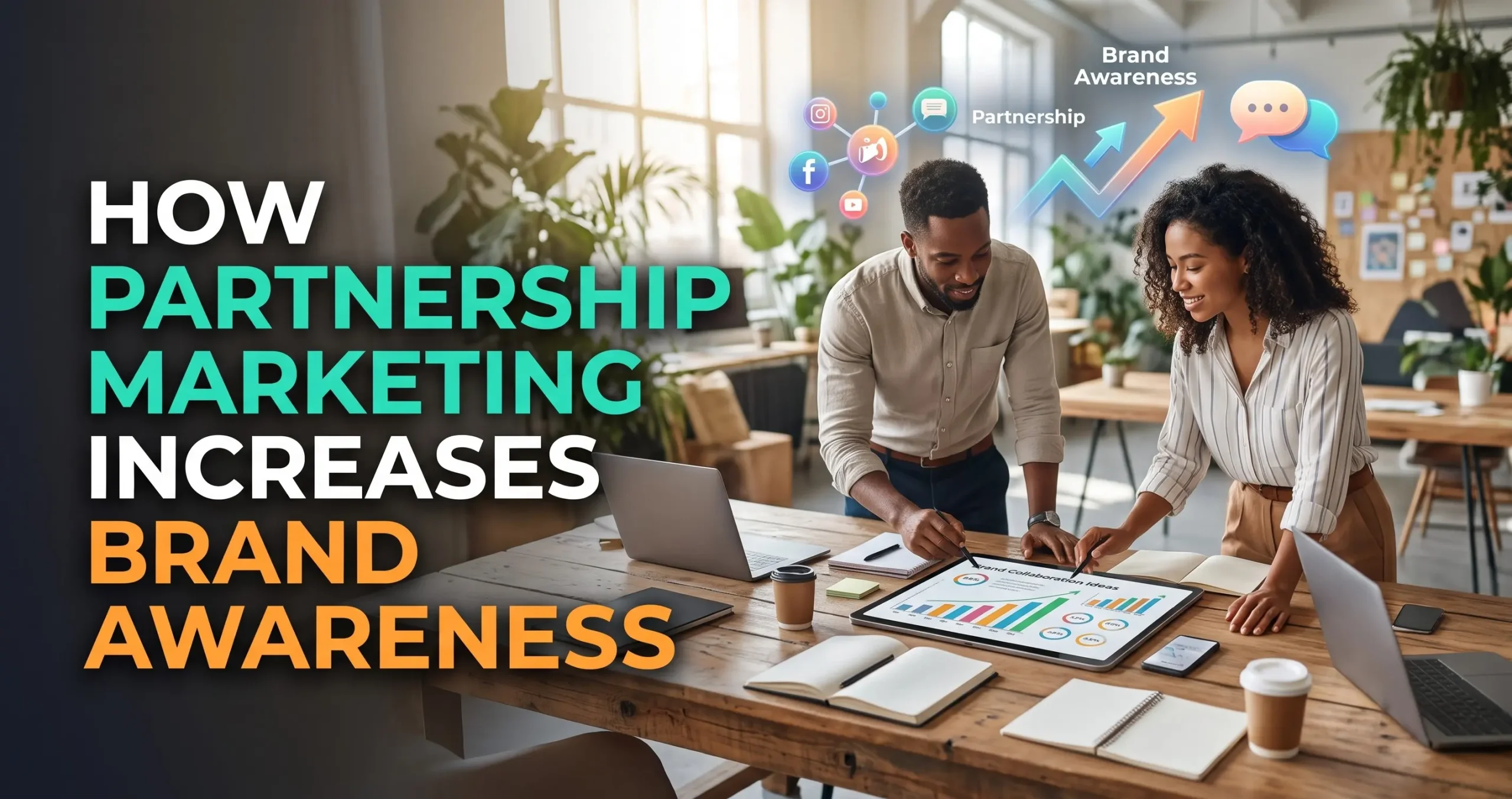 Brand awareness determines how easily customers recognize and remember a business. Partnership marketing helps improve visibility by introducing brands to audiences through trusted business relationships and shared promotional activities.
Expanding Audience Reach
Collaborating with another organization provides access to its existing audience. This allows businesses to introduce their products and services to people who may not have previously encountered their brand.
For example, a software company partnering with a digital marketing agency can reach businesses interested in technology and online growth. Both partners can promote relevant resources through their websites, newsletters, and social media channels.
Building Brand Recognition
Repeated exposure through different marketing channels can help customers become more familiar with a brand. Partnership campaigns provide opportunities for businesses to appear in partner content, promotional materials, industry events, and online discussions.
Consistent messaging across these channels helps strengthen brand recognition. When partnerships involve organizations with compatible reputations, they can also contribute to stronger brand positioning.
Building Strong Business Relationships Through Strategic Partnerships
Successful partnerships depend on trust, communication, and shared objectives. Businesses need to establish relationships that provide meaningful value to every participating organization rather than focusing only on short-term promotional benefits.
Identifying the Right Business Partners
Choosing suitable partners is essential for achieving successful marketing outcomes. Companies should evaluate potential partners based on their industry relevance, audience characteristics, brand reputation, and business objectives.
A partnership between organizations serving similar customer groups can create valuable opportunities for cross-promotion. However, both businesses should maintain compatible values and provide complementary products or services.
Establishing Mutual Business Goals
Clear objectives help partners understand what they want to accomplish through collaboration. Goals may include increasing brand awareness, generating qualified leads, improving customer engagement, or entering new markets.
Defining responsibilities and expected outcomes before launching a campaign can reduce misunderstandings. Regular communication also helps partners evaluate progress and make necessary adjustments.
The Importance of Sponsor Engagement in Partnership Marketing
 Sponsor Engagement refers to the activities and communication that maintain meaningful relationships between sponsors, sponsored organizations, and their audiences. Strong engagement helps businesses create more valuable sponsorship opportunities and improve the overall effectiveness of collaborative marketing.
Creating Meaningful Sponsor Relationships
Sponsors generally expect partnerships to provide measurable business value and positive brand exposure. Businesses can strengthen these relationships by understanding sponsor expectations, communicating campaign progress, and delivering agreed promotional benefits.
For example, an organization hosting an industry event can provide sponsors with branding opportunities, audience interaction, and relevant promotional content. These activities help sponsors connect with potential customers while supporting the event’s objectives.
Maintaining Long-Term Sponsor Engagement
Long-term sponsor relationships require consistent communication and transparent reporting. Businesses should share campaign performance, audience feedback, and relevant results to demonstrate the value of their sponsorship activities.
Recognizing sponsor contributions and discussing future opportunities can also strengthen professional relationships. When sponsors experience positive outcomes, they may become interested in continuing or expanding their partnerships.
How Influencer Sponsorship Strengthens Brand Visibility
Influencer Sponsorship allows businesses to collaborate with content creators who have established audiences and influence within specific industries or communities. These collaborations can help brands communicate with targeted audiences through content that feels relevant to their interests.
Reaching Targeted Audiences
Influencers often develop communities around specific topics such as technology, fashion, fitness, travel, and lifestyle. Businesses can use these existing connections to introduce their products and services to relevant potential customers.
Selecting influencers based on audience relevance is generally more important than focusing only on follower numbers. Engagement quality, content credibility, and audience interests should also influence partnership decisions.
Creating Authentic Brand Experiences
Influencer collaborations can include product demonstrations, educational content, sponsored reviews, tutorials, and social media promotions. These formats allow businesses to communicate product benefits through content that matches an influencer’s usual style.
Authenticity is important because audiences value honest communication. Businesses should provide clear sponsorship disclosures and allow creators to communicate genuine experiences while following campaign guidelines.
Developing Effective Sponsorship Campaigns
Sponsorship Campaigns help businesses promote their brands through organized collaborations with events, organizations, creators, and community initiatives. Effective campaigns connect promotional activities with specific business objectives and audience interests.
Planning Campaign Objectives
Every sponsorship campaign should begin with a clear understanding of its purpose. Businesses may want to increase brand recognition, introduce a new product, reach a specific audience, or generate potential customers.
Campaign objectives should be measurable so organizations can evaluate performance after completion. A clear plan also helps partners understand their responsibilities and promotional expectations.
Selecting Suitable Sponsorship Opportunities
The success of a campaign depends partly on selecting opportunities that align with the brand’s identity and target audience. Companies can consider industry conferences, community events, sports activities, educational programs, and digital content partnerships.
Relevant sponsorship opportunities help brands reach audiences who are more likely to be interested in their offerings. This alignment can improve campaign relevance and strengthen audience connections.
Measuring Sponsorship Campaign Performance
Businesses should evaluate campaign performance using indicators that match their original objectives. These may include audience reach, website traffic, social media engagement, qualified leads, conversions, and brand mentions.
Comparing results with campaign costs can help organizations understand whether their sponsorship investments are delivering meaningful value. Performance insights can also guide future partnership decisions.
Using Digital Channels to Strengthen Partnership Marketing
Digital marketing channels make it easier for businesses to collaborate, share content, and communicate with audiences. Websites, email marketing, social media, and online events provide flexible opportunities to promote partnerships across different customer touchpoints.
Social Media Collaboration
Social media platforms allow partners to publish shared content, announce collaborations, organize discussions, and promote special activities. Co-branded posts and collaborative videos can introduce each partner to a wider audience.
Consistent messaging and coordinated publishing schedules help maintain campaign visibility. Businesses should also monitor audience responses to understand which content formats generate meaningful engagement.
Content Marketing Partnerships
Businesses can collaborate on blog articles, industry reports, webinars, interviews, and educational resources. Shared content allows partners to combine their expertise and provide useful information to relevant audiences.
For example, a cybersecurity company and a technology consultancy could develop an educational guide about business data protection. Both organizations can distribute the resource through their communication channels, expanding its potential reach.
Improving Customer Engagement Through Brand Collaborations
 Partnership marketing can strengthen customer engagement by creating experiences that provide additional value. When businesses work together, they can offer customers more relevant information, services, and promotional opportunities.
Creating Valuable Customer Experiences
Collaborative activities such as exclusive offers, educational events, product bundles, and interactive campaigns can encourage customers to participate. These experiences give audiences reasons to interact with both partner brands.
For example, a travel company and a luggage brand may collaborate on a seasonal promotion. Customers benefit from relevant offers, while both businesses gain opportunities to increase exposure.
Building Customer Trust and Loyalty
Customers may develop greater confidence in a business when it collaborates with organizations they already recognize and trust. However, the partnership must provide a consistent and positive experience to support that confidence.
Businesses should ensure that collaborative promotions deliver genuine value and maintain clear communication. Positive experiences can encourage repeat interactions and stronger customer relationships.
Common Partnership Marketing Challenges and Their Solutions
Although partnership marketing offers significant opportunities, collaborations can also create challenges related to communication, expectations, brand alignment, and performance measurement. Addressing these issues early helps businesses maintain productive relationships and improve campaign outcomes.
Misaligned Business Objectives
Partners may have different expectations regarding campaign results, budgets, or responsibilities. These differences can create confusion and reduce campaign effectiveness.
Businesses should establish shared objectives, document important agreements, and define individual responsibilities before beginning promotional activities. Regular discussions can help keep both organizations aligned.
Inconsistent Brand Messaging
Different communication styles and promotional approaches can create inconsistent brand experiences. This may confuse audiences or weaken the credibility of a collaborative campaign.
Partners should agree on essential messaging, visual guidelines, promotional requirements, and approval processes. Maintaining flexibility while protecting brand identity helps create a consistent campaign experience.
Difficulty Measuring Results
Partnership performance can be difficult to evaluate when multiple organizations contribute to the same campaign. Without clear tracking methods, businesses may struggle to identify which activities generate results.
Using campaign-specific links, referral tracking, analytics platforms, and shared performance reports can improve measurement accuracy. Clear reporting expectations should be established before launching the partnership.
Best Practices for Successful Partnership Marketing
Long-term partnership success requires strategic planning, consistent communication, and a commitment to mutual value. Businesses should approach collaborations as ongoing professional relationships rather than isolated promotional activities.
Maintaining Transparent Communication
Partners should communicate regularly about campaign activities, challenges, audience responses, and performance. Transparent communication helps resolve problems quickly and strengthens professional trust.
Delivering Mutual Value
Every partnership should provide meaningful benefits to participating organizations and their audiences. Businesses should avoid collaborations that focus exclusively on short-term exposure without offering relevant value.
Evaluating and Improving Partnerships
Regular performance reviews help businesses understand which partnerships are producing positive results. Organizations can use these insights to improve campaign strategies, adjust responsibilities, and identify future collaboration opportunities.
Conclusion
Partnership Marketing is an effective strategy for businesses seeking to increase brand awareness, expand audience reach, and support sustainable growth. By collaborating with relevant organizations, sponsors, and influencers, companies can access new opportunities while sharing resources and marketing expertise.
Strong Sponsor Engagement helps maintain valuable professional relationships, while Influencer Sponsorship provides opportunities to connect with targeted audiences through trusted content creators. Well-planned Sponsorship Campaigns can further improve brand visibility and encourage meaningful customer participation.
Businesses that prioritize shared objectives, transparent communication, and measurable outcomes can build stronger partnerships over time. With the right strategy, partnership marketing can become an important part of long-term brand development and business success.
Frequently Asked Questions (FAQs)
1. What is Partnership Marketing?
Partnership Marketing is a strategy in which two or more businesses collaborate to promote their brands, products, or services. It helps organizations share resources, reach new audiences, and achieve mutual marketing objectives.
2. How does partnership marketing increase brand awareness?
It introduces businesses to new audiences through shared promotions, collaborative content, events, and partner communication channels. This increased exposure can improve brand recognition and visibility.
3. What are the main benefits of partnership marketing?
The main benefits include expanded audience reach, improved brand credibility, shared marketing resources, increased customer engagement, and opportunities for business growth.
4. What is Sponsor Engagement?
Sponsor Engagement involves maintaining meaningful relationships between sponsors and the organizations they support. It includes communication, promotional activities, audience interaction, and performance reporting.
5. How does Influencer Sponsorship support marketing goals?
Influencer Sponsorship allows businesses to promote products and services through content creators with relevant audiences. It can improve brand visibility, audience engagement, and product awareness.
6. What makes successful Sponsorship Campaigns?
Successful Sponsorship Campaigns have clear objectives, relevant partners, well-planned promotional activities, consistent communication, and measurable performance indicators.
7. How can businesses find the right marketing partners?
Businesses should evaluate potential partners based on audience relevance, brand reputation, industry compatibility, shared objectives, and available resources.
8. How can partnership marketing improve customer engagement?
Collaborative content, exclusive offers, events, and co-branded experiences encourage customers to interact with participating brands and discover additional value.
9. How do businesses measure partnership marketing success?
Businesses can measure success through brand reach, website traffic, engagement rates, referral visits, lead generation, conversions, and return on marketing investment.
10. Is partnership marketing suitable for small businesses?
Yes. Small businesses can collaborate with complementary brands, local organizations, influencers, and industry professionals. These partnerships can help expand visibility and reach new customers without relying entirely on large advertising budgets.