Why Mass Partnership Marketing Matters Today

Mass Partnership Marketing has emerged as one of the most powerful growth levers for modern brands operating in highly competitive, attention-scarce markets. As consumer trust in traditional advertising continues to decline, brands are increasingly relying on collaboration-driven growth models that prioritize shared credibility, audience alignment, and long-term value creation.
In today’s digital-first ecosystem, growth is no longer just about visibility—it is about relevance, trust, and ecosystem positioning. Mass Partnership Marketing allows brands to tap into existing networks, communities, and distribution channels at scale, creating impact that would otherwise require massive budgets and years of effort. This makes it especially effective for brands aiming to grow faster without sacrificing authenticity.
From technology platforms and consumer brands to service providers and startups, Mass Partnership Marketing is shaping how businesses compete, collaborate, and scale in the present market environment.
Understanding Mass Partnership Marketing in the Modern Context
Mass Partnership Marketing refers to a strategic collaboration model where brands form partnerships with large-scale platforms, networks, or multiple aligned partners to achieve mutual growth objectives. Unlike one-off collaborations, this approach focuses on repeatable, scalable, and system-driven partnerships.
What separates Mass Partnership Marketing from traditional partnerships is its emphasis on ecosystem thinking. Brands are no longer working in isolation; they are integrating into broader value networks where each partner amplifies reach, trust, and conversion potential.
In a market shaped by algorithmic discovery, social proof, and community influence, Mass Partnership Marketing becomes a growth engine rather than a marketing tactic.
Key Characteristics of Mass Partnership Marketing
- Scalable partner onboarding frameworks
- Shared value propositions across audiences
- Long-term collaboration mindset
- Data-driven partner performance evaluation
- Brand-to-brand trust transfer mechanisms
These characteristics ensure that partnerships move beyond surface-level exposure and contribute meaningfully to brand equity and revenue growth.
The Psychology Behind Mass Partnership Marketing Effectiveness
At its core, Mass Partnership Marketing works because it aligns with modern human psychology. Consumers today are overwhelmed by choice, skeptical of advertising, and highly influenced by social validation.
When a trusted brand or platform endorses another brand through partnership, it reduces perceived risk and accelerates decision-making. This trust transfer effect is one of the strongest psychological drivers behind Mass Partnership Marketing success.
Additionally, partnerships signal authority and legitimacy. A brand seen collaborating with established players is subconsciously perceived as credible, stable, and worthy of attention.
This psychological reinforcement makes Mass Partnership Marketing particularly effective in high-competition niches where differentiation is difficult through messaging alone.
Strategic Foundations of Mass Partnership Marketing
Before executing partnerships at scale, brands must establish a strong strategic foundation. Without clarity, Mass Partnership Marketing can quickly become chaotic and misaligned.
Defining Partnership Objectives
Clear objectives guide partner selection and campaign structure. Common objectives include:
- Expanding market reach
- Entering new customer segments
- Building brand authority
- Increasing lifetime customer value
- Accelerating product adoption
Each objective requires a different partnership design, messaging strategy, and performance metric.
Partner Fit and Value Alignment
Not all large partners are good partners. Successful Mass Partnership Marketing depends on alignment in:
- Brand values
- Audience demographics
- Market positioning
- Growth vision
When alignment is strong, collaboration feels natural rather than forced—an essential factor for credibility.
Designing Scalable Partnership Marketing Strategies

Building scalable Partnership Marketing Strategies is the backbone of effective Mass Partnership Marketing. These strategies ensure consistency while allowing flexibility across different partners.
Framework-Based Partner Onboarding
Rather than custom-building each partnership, leading brands develop standardized onboarding frameworks that include:
- Clear collaboration guidelines
- Co-branding rules
- Communication workflows
- Performance expectations
This approach reduces friction, speeds up execution, and maintains brand consistency across multiple partnerships.
Multi-Channel Partnership Activation
Modern Mass Partnership Marketing is not limited to a single channel. Successful strategies activate partnerships across:
- Content marketing
- Email campaigns
- Social media collaborations
- Affiliate and referral programs
- Platform integrations
This multi-touch approach increases exposure frequency and reinforces messaging across the customer journey.
Leveraging Partnership Marketing Trends for Competitive Advantage
Keeping pace with Partnership Marketing Trends is essential for brands that want to stay ahead of competitors. The partnership landscape is evolving rapidly due to technological shifts and changing consumer behavior.
Ecosystem-Based Partnerships
Brands are increasingly forming ecosystems rather than one-to-one collaborations. These ecosystems create network effects where each new partner adds incremental value to the entire group.
Data-Driven Partnership Optimization
Advanced analytics now allow brands to track partner-driven conversions, engagement quality, and long-term customer value. This data enables smarter decision-making and continuous optimization.
Creator and Community-Led Partnerships
Community trust is becoming more valuable than sheer reach. Brands are partnering with niche platforms, creator collectives, and community leaders to drive deeper engagement rather than broad but shallow exposure.
These Partnership Marketing Trends reflect a shift from transactional growth to relationship-driven scalability.
Crafting an Effective Partnership Marketing Proposal
An Effective Partnership Marketing Proposal is often the deciding factor in securing high-quality partners. In Mass Partnership Marketing, proposals must balance clarity, value, and scalability.
Core Elements of a Strong Proposal
- Clear value exchange for both parties
- Defined collaboration scope
- Audience overlap analysis
- Growth and revenue potential
- Measurement and reporting plan
A strong proposal demonstrates professionalism and strategic thinking, increasing the likelihood of long-term collaboration.
Presenting Mutual Growth Opportunities
Rather than focusing solely on what your brand gains, effective proposals highlight how the partnership benefits all involved stakeholders. This collaborative framing aligns with modern partnership expectations.
Execution Models in Mass Partnership Marketing
Execution determines whether strategy translates into results. Mass Partnership Marketing requires structured execution models to manage complexity.
Centralized Partnership Management
Many brands establish dedicated partnership teams or platforms to manage communication, assets, and performance tracking. Centralization ensures accountability and efficiency.
Automation and Technology Enablement
Automation tools help scale Mass Partnership Marketing by managing onboarding, tracking referrals, and distributing co-branded materials. Technology reduces manual effort and improves consistency.
Measuring Success in Mass Partnership Marketing

Measurement is critical to sustaining long-term growth. Without proper metrics, partnerships risk becoming vanity-driven rather than value-driven.
Key Performance Indicators (KPIs)
| KPI Category | Measurement Focus |
|---|---|
| Reach | Partner audience exposure |
| Engagement | Clicks, interactions, content shares |
| Conversion | Leads, sales, sign-ups |
| Retention | Repeat engagement from partner channels |
| Brand Equity | Trust, sentiment, authority signals |
Tracking these metrics provides actionable insights into which partnerships deliver real impact.
Risk Management and Long-Term Sustainability
While Mass Partnership Marketing offers significant upside, it also requires careful risk management. Poorly aligned partnerships can dilute brand identity or create dependency.
Maintaining Brand Control
Clear guidelines and governance structures help protect brand integrity across multiple collaborations.
Avoiding Over-Reliance on Single Partners
Diversification ensures that growth remains stable even if individual partnerships underperform or dissolve.
Advanced Use Cases of Mass Partnership Marketing Across Industries
Mass Partnership Marketing is not limited to a single industry or business model. Its flexibility allows brands across sectors to adapt partnership frameworks based on market dynamics, customer behavior, and regulatory environments. Understanding these use cases helps brands visualize how scalable collaboration works in real-world scenarios.
Technology and SaaS Ecosystems
In the technology and SaaS space, Mass Partnership Marketing often manifests through platform integrations, reseller networks, and ecosystem alliances. Software companies collaborate with complementary tools to offer bundled value, reduce churn, and increase switching costs. These partnerships create interconnected ecosystems where each product enhances the usability of the others.
Through Mass Partnership Marketing, SaaS brands gain accelerated distribution while partners benefit from added functionality and credibility. This model aligns perfectly with subscription-based growth logic.
Consumer Brands and Retail Networks
Consumer brands leverage Mass Partnership Marketing through co-branded campaigns, retail alliances, and loyalty program integrations. When multiple brands collaborate around shared lifestyle positioning, they tap into emotional resonance rather than transactional promotion.
Retail partnerships also allow brands to scale geographically without heavy infrastructure investments, making Mass Partnership Marketing a cost-efficient expansion strategy.
Financial Services and Fintech Collaborations
In fintech and financial services, trust is paramount. Mass Partnership Marketing enables newer players to build credibility by partnering with established institutions, payment networks, or platforms. These collaborations reduce adoption friction and increase consumer confidence.
Building Long-Term Partnership Infrastructure
Short-term campaigns rarely unlock the full value of Mass Partnership Marketing. Sustainable success requires infrastructure that supports long-term collaboration, performance tracking, and relationship management.
Partnership Governance Models
Governance frameworks define decision-making authority, escalation processes, and accountability structures. Clear governance ensures that partnerships remain aligned even as scale and complexity increase.
Knowledge Sharing and Enablement
Top-performing brands invest in partner education, onboarding resources, and shared knowledge hubs. This enablement approach improves execution quality and deepens partner commitment over time.
Mass Partnership Marketing thrives when partners feel empowered, not controlled.
Integrating Mass Partnership Marketing with Other Growth Channels
Mass Partnership Marketing delivers maximum impact when integrated with broader growth strategies rather than treated as a standalone initiative.
Alignment with Content and SEO Strategies
Partnership-driven content such as co-authored articles, joint research, and collaborative webinars strengthens authority signals and organic visibility. Search engines increasingly reward content that demonstrates real-world relationships and topical relevance.
Performance Marketing and Attribution
Modern attribution models allow brands to track partnership-driven conversions alongside paid and owned channels. This visibility helps justify investment and optimize resource allocation.
Product-Led Growth Synergies
In product-led businesses, Mass Partnership Marketing supports growth by embedding partnerships directly into user experiences. Integrations, marketplaces, and shared onboarding flows reduce friction and enhance perceived value.
Common Challenges in Scaling Mass Partnership Marketing

Despite its advantages, Mass Partnership Marketing presents unique challenges that brands must proactively manage.
Operational Complexity
As partnerships scale, coordination becomes more complex. Without systems and automation, teams risk inefficiency and miscommunication.
Consistency Across Partners
Maintaining consistent messaging, quality, and brand representation across multiple partners requires clear guidelines and monitoring mechanisms.
Measuring Intangible Value
Not all partnership benefits are immediately quantifiable. Brand trust, authority, and long-term loyalty often materialize over time, requiring patience and strategic foresight.
Ethical and Brand-Safety Considerations
Modern consumers are highly sensitive to brand behavior. Mass Partnership Marketing must be executed ethically to avoid reputational risk.
Transparency and Disclosure
Clear communication about partnerships builds trust and complies with regulatory expectations. Transparency reinforces credibility rather than diminishing it.
Partner Reputation Management
Brands are increasingly judged by the company they keep. Ongoing partner evaluation ensures alignment with ethical standards and social expectations.
Globalization and Cross-Market Partnerships
Mass Partnership Marketing plays a critical role in global expansion strategies. Partnerships provide cultural insight, local credibility, and regulatory navigation support.
Localization Through Partnerships
Local partners help brands adapt messaging, pricing, and user experience to regional preferences without losing core brand identity.
Cross-Border Ecosystem Development
Global ecosystems allow brands to serve multinational audiences seamlessly, strengthening competitive positioning in interconnected markets.
Talent, Culture, and Internal Alignment
Successful Mass Partnership Marketing depends not only on external relationships but also on internal culture.
Partnership-Centric Mindset
Organizations that prioritize collaboration over competition are better positioned to unlock partnership value. This mindset encourages openness, experimentation, and long-term thinking.
Cross-Functional Collaboration
Marketing, sales, product, and legal teams must work together to support partnerships. Alignment reduces friction and accelerates execution.
The Future Outlook of Mass Partnership Marketing
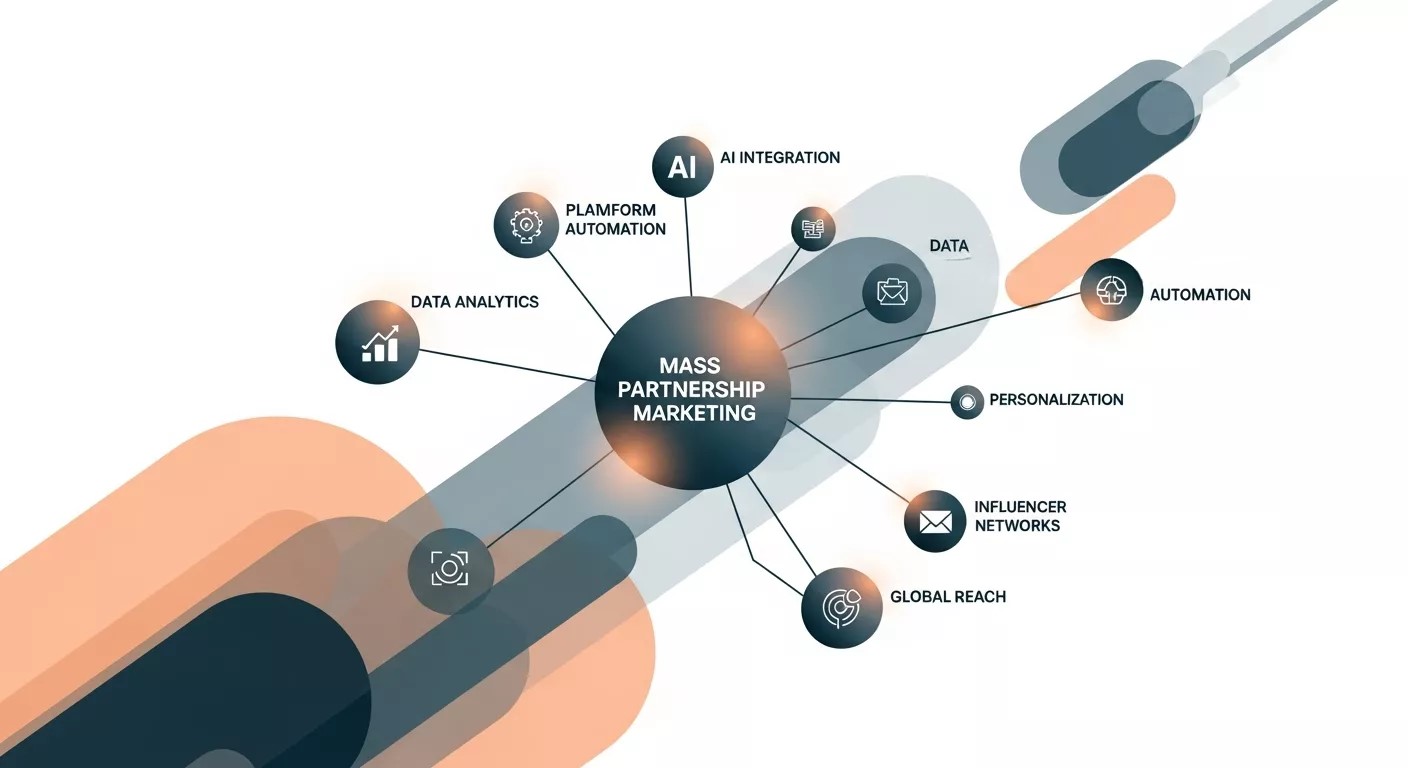
As markets become more interconnected, Mass Partnership Marketing will continue to evolve into a core business growth function rather than a supporting tactic. Brands that invest in systems, relationships, and strategic clarity today will be better positioned for tomorrow’s competitive landscape.
Emerging developments such as AI-driven partner discovery, predictive performance modeling, and decentralized collaboration platforms are expected to reshape how partnerships are formed and managed.
In this future environment, Mass Partnership Marketing will not merely support brand growth it will actively define how brands compete, collaborate, and sustain relevance in an increasingly networked economy.
Conclusion
Mass Partnership Marketing is no longer an optional growth tactic but a strategic necessity for brands seeking scalable, trust-driven expansion. By combining aligned partnerships, data-led execution, and long-term ecosystem thinking, brands can achieve sustainable growth, stronger authority, and lasting market relevance.
Frequently Asked Questions (FAQ)
What is Mass Partnership Marketing?
Mass Partnership Marketing is a scalable collaboration model where brands partner with multiple platforms or networks to drive growth through shared trust, reach, and ecosystem-based value creation.
How is Mass Partnership Marketing different from traditional partnerships?
Traditional partnerships are often one-off or campaign-based, while Mass Partnership Marketing focuses on long-term, repeatable, and system-driven collaborations designed for scale.
Why is Mass Partnership Marketing effective for brand growth?
It leverages existing audience trust, reduces acquisition costs, accelerates credibility, and aligns with modern consumer psychology that values recommendations over direct advertising.
Which types of businesses benefit most from Mass Partnership Marketing?
SaaS companies, consumer brands, fintech firms, marketplaces, and service-based businesses benefit the most due to their need for scalable distribution and trust-building.
What role does trust play in Mass Partnership Marketing?
Trust is central. Partnerships allow brands to borrow credibility from established partners, reducing perceived risk and improving conversion rates.
How do brands choose the right partners?
The right partners align in audience, values, market positioning, and long-term vision. Strategic fit matters more than sheer audience size.
What metrics should be used to measure partnership success?
Key metrics include reach, engagement quality, conversion rate, customer lifetime value, retention, and long-term brand authority signals.
Can Partnership Marketing support global expansion?
Yes. Local and regional partners help brands enter new markets by providing cultural insight, regulatory guidance, and local credibility.
What are the biggest challenges in scaling Mass Partnership Marketing?
Common challenges include operational complexity, maintaining brand consistency, managing multiple stakeholders, and measuring intangible value like trust.
How does technology support Partnership Marketing?
Automation tools, analytics platforms, and AI-driven partner management systems help brands scale partnerships efficiently and track performance accurately.
Is Partnership Marketing suitable for startups?
Absolutely. Startups can use partnerships to grow faster, reduce marketing costs, and gain credibility without large advertising budgets.
What is the future of Partnership Marketing?
The future lies in ecosystem-based growth, AI-powered partner discovery, predictive analytics, and deeper integration between products, platforms, and communities.