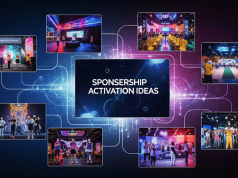
Sponsorship Linked Marketing helps brands build trust, relevance, and long-term influence by integrating sponsorship with audience psychology, content, and measurable outcomes moving beyond visibility to create meaningful, relationship-driven brand growth in today’s attention economy.
Why Sponsorship Linked Marketing Is Redefining Brand Influence

Digital-first consumer behavior, fragmented media attention, and declining trust in traditional advertising have forced brands to rethink how they create real influence. In this environment, surface-level impressions no longer drive growth. Brands now need credibility, relevance, and emotional alignment. This is where Sponsorship Linked Marketing has evolved into one of the most powerful, yet often misunderstood, growth mechanisms.
Unlike conventional sponsorships that stop at logo placement or visibility, Sponsorship Linked Marketing connects brand purpose, audience psychology, and long-term value creation. It doesn’t just “support” events, creators, or causes—it strategically links sponsorship assets with measurable marketing outcomes.
This article opens the black box of how Sponsorship Linked Marketing actually works, why it performs differently from traditional sponsorship models, and how brands can use it to influence trust, loyalty, and decision-making in today’s attention economy.
Understanding Sponsorship Linked Marketing in the Modern Marketing Ecosystem
To understand Sponsorship Linked Marketing, we must first accept one reality: audiences today don’t separate “marketing” from “experience.” They judge brands based on alignment, authenticity, and contribution. Sponsorship Linked Marketing exists at this intersection.
At its core, Sponsorship Linked Marketing is a strategic framework where sponsorship investments are directly integrated with marketing objectives—brand positioning, audience engagement, lead generation, and long-term relationship building. Instead of asking, “Where should our logo appear?” brands ask, “How does this sponsorship move our audience closer to trust and action?”
This shift turns sponsorship from a cost center into a value-creation engine. It also explains why brands that apply Sponsorship Linked Marketing correctly see compounding returns rather than short-term exposure spikes.
What Is Sponsorship In Marketing? A Foundational Perspective
Before diving deeper, it’s important to ground the discussion by answering a common but often oversimplified question: What Is Sponsorship In Marketing?
Traditionally, sponsorship in marketing refers to a brand financially or materially supporting an event, organization, individual, or platform in exchange for exposure. This exposure could include logo placement, mentions, access, or association with a specific audience.
However, this definition is no longer sufficient. Modern Sponsorship Linked Marketing expands this idea by embedding sponsorship into storytelling, content, digital touchpoints, data capture, and post-event engagement. The sponsorship becomes part of the marketing narrative rather than a side element.
This evolution reflects how audiences now consume brand messages not as interruptions, but as contextual experiences.
The Psychological Engine Behind Sponsorship Linked Marketing

One of the biggest reasons Sponsorship Linked Marketing works is psychology. Humans are wired to trust associations more than claims. When a brand aligns itself with something an audience already values sports, culture, education, sustainability, creators, or communities it borrows emotional credibility.
Sponsorship Linked Marketing leverages:
- Social proof: “If this brand supports what I care about, it must understand me.”
- Contextual trust: Messages delivered within meaningful environments feel less intrusive.
- Identity alignment: Consumers prefer brands that reflect their beliefs and lifestyle.
This psychological layering is why Sponsorship Linked Marketing outperforms traditional ads in recall, favorability, and long-term brand equity.
From Visibility to Value: The Structural Shift in Sponsorship
For decades, sponsorship success was measured by visibility logos, banners, mentions, reach. But visibility without meaning no longer works. Audiences scroll past logos; they engage with relevance.
This transformation is often described as What is the Sponsorship Marketing Paradigm Shift a movement from passive exposure to active value creation. Sponsorship Linked Marketing sits at the center of this shift.
Instead of asking how many people saw the sponsorship, brands now ask:
- Did the sponsorship spark conversation?
- Did it create useful or inspiring content?
- Did it strengthen brand perception?
- Did it move audiences toward action?
By answering these questions, Sponsorship Linked Marketing reframes success around influence rather than impressions.
How Sponsorship Linked Marketing Integrates with the Funnel
One misconception is that sponsorship only supports top-of-funnel awareness. In reality, Sponsorship Linked Marketing can influence every stage of the customer journey.
At the awareness stage, sponsorship builds familiarity in trusted environments. At the consideration stage, branded content, collaborations, and experiences provide deeper brand understanding. At the conversion stage, exclusive access, offers, or community validation reduce friction. Post-purchase, sponsorship-driven communities reinforce loyalty.
This is why advanced brands treat Sponsorship Linked Marketing as a full-funnel strategy rather than a branding add-on.
Sponsorship Linked Marketing and Content Ecosystems
Content is the connective tissue that unlocks the real power of Sponsorship Linked Marketing. Without content activation, sponsorship remains static. With content, it becomes scalable and measurable.
Modern sponsorship activations often include:
- Co-created video and storytelling assets
- Behind-the-scenes content
- Educational formats like workshops or panels
- Interactive digital experiences
- Creator-led narratives
These assets extend the life of the sponsorship far beyond the event or partnership window. They also allow Sponsorship Linked Marketing to perform across platforms social media, owned media, email, and performance channels.
Data, Measurement, and the Black Box Problem
One reason many brands hesitate to invest deeply in sponsorship is measurement uncertainty. Sponsorship Linked Marketing solves this by connecting sponsorship assets to measurable KPIs.
Advanced brands track:
- Engagement quality, not just reach
- Brand lift and sentiment change
- Lead behavior post-exposure
- Community growth and retention
- Long-term brand search demand
By integrating sponsorship data with CRM, analytics, and attribution models, Sponsorship Linked Marketing becomes transparent and accountable. The “black box” opens when sponsorship is treated as a system, not a standalone tactic.
Strategic Alignment and Sponsorship Marketing Strategies

Sponsorship fails when it’s disconnected from brand strategy. It succeeds when alignment is intentional. This is where Sponsorship Marketing Strategies play a crucial role.
Effective Sponsorship Linked Marketing strategies begin with clarity:
- Who is the audience we want to influence?
- What values matter to them?
- What platforms or communities already have their trust?
- How does our brand authentically fit into that space?
When these questions guide sponsorship selection and activation, the result is coherence something audiences instantly recognize and reward.
Relationship Building as a Core Outcome
Beyond awareness and conversion, one of the most undervalued outcomes of Sponsorship Linked Marketing is relationship depth. Brands don’t just gain attention; they gain access.
Through ongoing sponsorships, brands can build long-term partnerships with communities, creators, and platforms. These relationships compound value over time, creating defensibility that competitors can’t easily replicate.
This is closely connected to How Sponsorships Enhance Relationship Marketing, where trust is built through repeated, meaningful engagement rather than one-off campaigns. Sponsorship Linked Marketing transforms brands from advertisers into participants.
The Role of Culture, Timing, and Relevance
Cultural relevance is a hidden multiplier in Sponsorship Linked Marketing. Sponsorships that align with emerging trends, social conversations, or generational shifts perform disproportionately better.
Timing matters. Supporting a movement early, investing in a growing community, or partnering with creators before they peak creates authenticity that late-stage sponsorships can’t buy.
This cultural intelligence separates surface-level sponsorship from truly strategic Sponsorship Linked Marketing.
Sponsorship Linked Marketing in the Age of Creator Economy
The rise of the creator economy has dramatically expanded sponsorship opportunities. But it has also raised expectations. Audiences can immediately sense inauthentic brand-creator partnerships.
Sponsorship Linked Marketing works best when brands give creators creative freedom while aligning on shared values. The brand becomes an enabler, not a controller.
This dynamic produces content that feels organic, drives engagement, and strengthens brand perception all without traditional ad resistance.
Why Sponsorship Linked Marketing Is a Long-Term Growth Asset
Unlike performance ads that stop working when budgets stop, Sponsorship Linked Marketing builds durable brand assets trust, association, and memory. These assets continue influencing consumer behavior long after the campaign ends.
Brands that invest consistently in Sponsorship Linked Marketing often see:
- Lower cost of acquisition over time
- Higher brand preference in competitive markets
- Stronger community advocacy
- Increased resilience during market downturns
This long-term impact is why sponsorship, when linked correctly, is no longer optional it’s strategic.
Opening the Black Box Fully
When brands treat sponsorship as a system integrated with content, data, psychology, and relationships the mystery disappears. Sponsorship Linked Marketing becomes predictable, scalable, and powerful.
It’s not about spending more. It’s about linking every sponsorship decision to human intent, cultural relevance, and measurable outcomes. That is how the black box opens and how modern brands win.
Sponsorship Linked Marketing and Brand Meaning Creation

Modern consumers don’t buy products; they buy meaning. In saturated markets where functional differentiation is minimal, brands win by occupying psychological and cultural space. Sponsorship-driven models play a crucial role in this process because they allow brands to attach themselves to meaning that already exists.
When a brand sponsors an initiative, event, or community that people care about, it becomes part of a shared story. This story shapes perception over time. Rather than communicating “what we sell,” the brand communicates “what we stand for.” This distinction is subtle but powerful.
Sponsorship Linked Marketing enables brands to embed themselves within narratives of progress, creativity, resilience, or belonging. These narratives are far more memorable than product features. Over time, they influence preference without requiring constant reinforcement.
Risk, Authenticity, and the Cost of Misaligned Sponsorships
While sponsorship offers enormous upside, it also carries reputational risk. Audiences today are highly sensitive to inauthentic participation. A misaligned sponsorship can damage trust faster than a failed ad campaign.
The risk does not come from sponsorship itself, but from poor intent signaling. When audiences perceive that a brand is exploiting a cause, trend, or community without genuine commitment, backlash follows. This is why strategic evaluation is essential.
Successful sponsorship-driven marketing requires brands to ask hard questions:
- Does this partnership reflect our values?
- Are we willing to support this space long-term?
- Would this sponsorship still make sense without media exposure?
When brands pass these tests, authenticity becomes self-evident. When they don’t, sponsorship quickly turns into a liability.
Internal Brand Alignment and Organizational Readiness
One overlooked factor in sponsorship effectiveness is internal alignment. Sponsorship does not exist in isolation it intersects with brand strategy, content teams, sales enablement, PR, and customer experience.
If internal stakeholders don’t understand why a sponsorship exists, its value erodes. Disconnected execution leads to fragmented messaging and missed opportunities. On the other hand, when teams share a unified understanding, sponsorship becomes a multiplier across departments.
Sponsorship Linked Marketing works best when organizations treat sponsorship as a strategic asset rather than a tactical decision. This requires internal education, cross-functional collaboration, and clear success frameworks.
Sponsorship as a Signal in Competitive Markets
In crowded categories, consumers often rely on signals rather than analysis to make decisions. Sponsorship acts as one of these signals.
When a brand consistently appears in credible, relevant environments, it signals legitimacy, scale, and commitment. This signaling effect is especially powerful in emerging industries or high-consideration categories where trust is critical.
Over time, repeated sponsorship presence shapes category perception. The brand becomes associated not just with a product, but with leadership within a space. Competitors may copy messaging, but they cannot easily replicate years of consistent sponsorship signaling.
The Compounding Effect of Long-Term Sponsorship Systems
Short-term sponsorships deliver limited returns. Long-term sponsorship systems, however, create compounding value.
As partnerships mature, audiences recognize continuity. Familiarity increases. Trust deepens. Content quality improves. Access expands. Each cycle builds on the last, reducing the need for aggressive persuasion.
This compounding effect is one of the most underappreciated advantages of Sponsorship Linked Marketing. While results may appear slower at the beginning, long-term systems outperform burst campaigns by a significant margin.
Brands that understand this dynamic stop asking, “What do we get this quarter?” and start asking, “What are we building over time?”
Sponsorship Linked Marketing as a Strategic Moat
In the long run, the greatest value of sponsorship is defensibility. When a brand becomes deeply integrated into communities, platforms, or cultural spaces, it creates a moat competitors cannot cross easily.
These relationships are built on trust, history, and shared success. They cannot be bought overnight. This makes sponsorship-driven ecosystems one of the few sustainable advantages left in modern marketing.
Sponsorship Linked Marketing, when executed with discipline and intent, evolves from a promotional tool into a strategic moat protecting brand relevance in an increasingly noisy world.
Sponsorship Linked Marketing and the Rise of NFT Marketing
As digital ownership reshapes how people assign value online, NFT marketing has emerged as a powerful extension of sponsorship-driven brand engagement. NFTs are no longer limited to speculative assets; they have evolved into tools for access, identity, and community participation. This evolution creates a natural intersection with sponsorship-based marketing models.
In the context of Sponsorship Linked Marketing, NFTs function as activation layers rather than standalone campaigns. Brands are increasingly using NFTs to deepen sponsored experiences—offering exclusive digital assets, gated access, or proof-of-participation tied to events, creators, or communities they support. Instead of passively sponsoring attention, brands enable ownership-driven engagement.
NFT marketing enhances sponsorship by transforming audiences into stakeholders. When consumers receive a digital collectible tied to a sponsored event or partnership, the relationship shifts. The brand is no longer just associated with the experience—it becomes embedded within it. This sense of ownership strengthens emotional attachment and extends the lifespan of sponsorship beyond physical or time-bound activations.
From a psychological perspective, NFTs amplify scarcity, status, and belonging—three drivers that already underpin effective sponsorship. Limited-edition tokens, membership-based utilities, and community-linked rewards create value that audiences perceive as personal rather than promotional. As a result, NFT-enabled sponsorships often generate higher retention, organic advocacy, and repeat engagement.
Importantly, NFT marketing also addresses a long-standing challenge in sponsorship measurement. On-chain data provides transparent insights into participation, transfers, and long-term engagement. This allows brands to track how sponsorship-linked assets circulate within communities, offering a clearer view of cultural impact than traditional impression metrics.
When integrated thoughtfully, NFT marketing does not replace sponsorship it upgrades it. It turns sponsored moments into persistent digital touchpoints and converts brand support into programmable value. In this way, NFTs represent the next evolution of Sponsorship Linked Marketing, where influence is not only experienced but owned.
Conclusion
Sponsorship Linked Marketing is no longer about exposure but about influence. By aligning sponsorship with culture, trust, and measurable outcomes, brands can build lasting relevance, deeper relationships, and sustainable growth in a crowded digital landscape.
Frequently Asked Questions (FAQ)
What is Sponsorship Linked Marketing?
Sponsorship Linked Marketing is a strategic approach that integrates sponsorships with marketing objectives to build trust, engagement, and long-term brand influence rather than focusing only on visibility.
How is Sponsorship Linked Marketing different from traditional sponsorship?
Traditional sponsorship emphasizes logo placement and exposure, while Sponsorship Linked Marketing connects sponsorship assets with content, audience psychology, data, and measurable business outcomes.
Why is Sponsorship Linked Marketing effective in today’s digital landscape?
It works because modern consumers trust experiences, communities, and cultural alignment more than direct advertising, making sponsorship-driven influence more authentic and impactful.
Can Sponsorship Linked Marketing support the full marketing funnel?
Yes. It can drive awareness, consideration, conversion, and long-term loyalty by embedding brands into trusted environments across the customer journey.
Is Sponsorship Linked Marketing suitable for long-term brand growth?
Absolutely. When executed consistently and strategically, it builds durable brand equity, stronger relationships, and sustainable competitive advantage over time.