
Sponsorship is now an important way for brands to grow. It helps them reach new audiences, build visibility, and improve engagement. Brands use many types of partnerships — like sports sponsorships, influencer deals, events, and digital campaigns. But to invest confidently, they need clear data. This is where Sponsorship Valuation becomes useful.
Sponsorship valuation shows the fair market value of each asset. It also explains the real media value a brand can expect. Many teams use tools like a valuation calculator, industry benchmarks, and insights from valuation companies to make better decisions. Platforms such as SponsorPulse also help with audience data and sentiment.
With proper sponsorship evaluation, brands can measure exposure, track performance through sponsorship monitoring, and estimate true sponsorship ROI. This makes negotiations easier and creates stronger sponsorship deals.
This guide will help you check sponsor ROI, understand brand impact, and get the most value from every partnership opportunity.
What Is Sponsorship Valuation?
Sponsorship valuation is the process of finding the true financial value of a sponsorship opportunity. It helps brands understand what they should pay and helps rights holders know what they should charge. The valuation looks at brand visibility, audience reach, engagement quality, activation ideas, and overall media value.
Modern valuation also uses tools like a valuation calculator, benchmark data from valuation companies, and audience insights from platforms such as SponsorPulse. These help both sides make fair decisions.
A clear and accurate valuation supports better sponsorship evaluation, stronger negotiations, and more profitable sponsorship deals. It also helps brands track performance later through sponsorship monitoring and improves long-term sponsorship ROI.
Why Sponsorship Valuation Matters?

Types of Sponsorship Assets to Evaluate
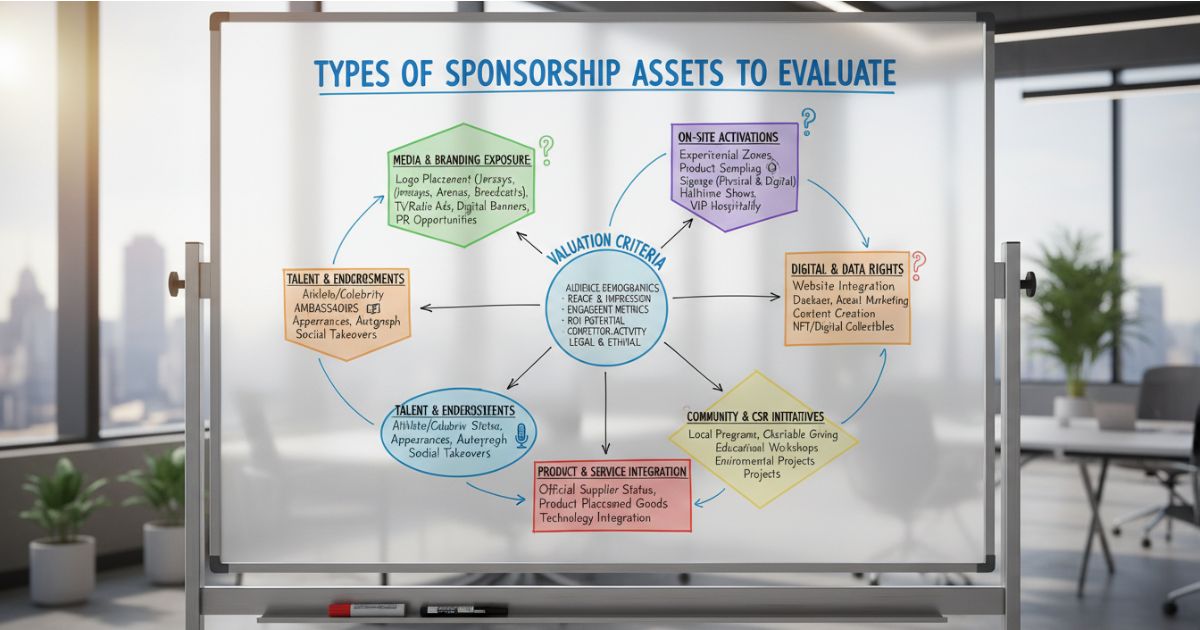
Calculating sponsorship valuation helps brands and rights holders understand the true worth of a deal. It measures media value, audience impact, and expected sponsorship ROI. Using a valuation calculator, benchmarking data, and insights from SponsorPulse or valuation companies makes this process more accurate.
Step 1: List All Sponsorship Assets
Make a complete sponsorship inventory including:
- Branding and visibility assets
- Digital and social media assets
- Hospitality and VIP benefits
- Activation and on-site campaigns
- Licensing and intellectual property rights
Step 2: Assign Media Value
Estimate media impressions, audience reach, and engagement metrics. Include brand lift and exposure from both on-site and digital channels.
Step 3: Apply Valuation Tools
Use a valuation calculator or reports from valuation companies. Tools like SponsorPulse can provide audience insights, fan passion scores, and competitive benchmarks.
Step 4: Forecast Sponsorship ROI
Calculate expected returns from:
- Audience engagement and conversions
- Media impressions and visibility
- Activation campaign performance
Step 5: Compare with Benchmarks
Use benchmarking reports from similar sponsorship deals in the industry. This ensures the valuation is fair and competitive.
Step 6: Adjust for Activation and Contract Terms
Factor in exclusivity, event timing, or co-branded content opportunities. Review sponsorship agreements for any clauses that affect value.
Proper sponsorship evaluation ensures the final deal reflects true market value, maximizes marketing sponsorship impact, and helps both brands and rights holders track performance through sponsorship monitoring.
How to Conduct a Sponsorship Valuation?

Step 1: List All Sponsorship Assets
Make a complete inventory of all branding, digital, experiential, and hospitality assets. This helps assign value without missing anything.
Step 2: Review Audience Data
Audience quality directly affects sponsorship pricing.
Evaluate:
- Audience size
- Location and demographics
- Buying behavior
- Interests
- Engagement level
Step 3: Calculate Media Value
Media value is one of the biggest parts of sponsorship valuation.
Common valuation methods:
Cost Per Thousand (CPM)
Values impressions and reach.
Advertising Value Equivalency (AVE)
Estimates what equivalent paid media would cost.
Cost Per Engagement (CPE)
Measures engagement and interaction value.
Share of Voice (SOV) analysis
Compares visibility against competitors.
Step 4: Measure Engagement and Activation Potential
Engagement is more valuable than impressions. Strong engagement increases sponsorship ROI.
Look for:
- Clicks
- Comments
- Shares
- Likes
- Event participation
- Lead generation
Step 5: Evaluate Brand Fit
Brand relevance increases sponsorship value. A sponsorship works better when the audience aligns with the sponsor’s niche.
Examples:
- Tech brands with gaming events
- Fitness brands with sports events
- Beauty brands with lifestyle creators
Step 6: Consider Exclusivity and Scarcity
Exclusivity adds premium value. Limited sponsorship categories or exclusive rights increase pricing.
Step 7: Use Industry Benchmarks
Compare your sponsorship assets with:
- Competitor pricing
- Market rates
- Historical sponsorship deals
- Industry averages
Step 8: Estimate Sponsorship ROI
ROI gives a clear picture of performance and helps forecast future value.
Measure:
- Media exposure value
- Social engagement
- Website traffic
- Sales impact
- Brand lift
- Customer lifetime value
The Role of Data in Sponsorship Valuation
Data plays a pivotal role in accurate sponsorship valuation by providing measurable insights into audience behavior, media exposure, and engagement levels. By leveraging data from tools like valuation calculators, social analytics platforms, and audience insight tools, brands can assess the true value of sponsorship assets. For example, data on audience demographics and engagement rates helps determine the relevance of a sponsorship to a brand’s target market. Data-driven valuation ensures transparency, fair pricing, and stronger partnerships.
How to Maximize Sponsorship Value?

Once you have completed the sponsorship valuation, the next step is to ensure that every sponsorship asset delivers maximum impact. Effective strategies help brands and rights holders make the most of their investment while improving audience engagement and brand visibility.
1. Plan Creative Activation Campaigns
Creative activations turn sponsorship assets into meaningful experiences. Well-designed campaigns enhance both media value and audience engagement. Examples include:
- Contests or giveaways that encourage participation
- Live events, pop-up experiences, or branded zones
- Product showcases or interactive demonstrations
- Influencer collaborations that align with the brand
Activations should connect directly with the target audience and highlight the value of the sponsorship deal.
2. Track and Optimize Performance
Monitoring performance helps refine campaigns in real-time. Brands can measure:
- Social media engagement and mentions
- Media impressions across digital and traditional channels
- Event attendance and participation rates
- Audience feedback through surveys or focus groups
Using tools like SponsorPulse or a valuation calculator can provide insights into audience interest, helping both brands and rights holders improve sponsorship ROI naturally.
3. Build and Maintain Long-Term Partnerships
Long-term sponsorship agreements often deliver higher value than one-off deals. Benefits include:
- Improved cost efficiency across multiple campaigns
- Stronger connections with the target audience
- More opportunities for activation, content creation, and digital campaigns
Maintaining relationships with event organizers and other rights holders ensures consistent performance and opens doors for future sponsorship opportunities.
4. Enhance Storytelling and Content
Engaging content strengthens the partnership and increases audience impact. Brands should focus on:
- Behind-the-scenes content from events or campaigns
- Interviews with athletes, performers, or influencers
- Case studies demonstrating the impact of the sponsorship
- Product storytelling that highlights brand values
High-quality content improves brand exposure, supports marketing goals, and enhances the overall media value of the sponsorship.
5. Leverage Digital Platforms and Influencers
Digital channels and carefully selected influencers can amplify sponsorship reach and engagement. This includes:
- Social media posts, videos, and shoutouts
- Collaborations with relevant influencers to expand audience reach
- Branded content and online experiences that complement on-site activations
When executed thoughtfully, digital campaigns and influencer partnerships increase audience reach and strengthen the measurable impact of every sponsorship asset.
By combining creative activation, continuous performance tracking, long-term relationship building, engaging storytelling, and digital amplification, brands can fully maximize the value of their sponsorship deals. This approach ensures measurable results and a higher return from every partnership opportunity while keeping all decisions data-driven and transparent.
Common Mistakes in Sponsorship Valuation

Even experienced brands and rights holders can make errors when evaluating sponsorship deals. Avoiding these mistakes ensures more accurate sponsorship evaluation and stronger partnerships.
1. Overvaluing or Undervaluing Assets
Assigning too much or too little media value to branding, digital, or activation assets can lead to unfair deals. Always use a valuation calculator or benchmark data from valuation companies.
2. Ignoring Audience Fit
Focusing only on visibility without considering audience demographics or engagement reduces the effectiveness of a sponsorship. Tools like SponsorPulse can provide insights into audience interest and behavior.
3. Relying on Outdated Metrics
Using old data for reach, impressions, or engagement may misrepresent actual value. Always track performance through sponsorship monitoring.
4. Skipping Activation Value
Some valuations ignore on-site or digital activations, contests, or influencer campaigns. These can significantly boost the overall sponsorship ROI.
5. Neglecting Long-Term Potential
Short-term thinking may overlook opportunities for repeat partnerships, cumulative brand lift, or future co-branded campaigns.
6. Blindly Copying Competitor Pricing
Every sponsorship deal is unique. Copying pricing from other deals without considering assets, audience, and media exposure can cause mispricing.
By avoiding these mistakes, brands and rights holders can make data-driven decisions, improve negotiation confidence, and maximize the return on every marketing sponsorship.
How Sponsorship Valuation Supports Negotiation
Sponsorship valuation is a critical tool for negotiation, ensuring both brands and rights holders achieve fair and mutually beneficial agreements. By presenting data-backed insights, such as audience reach, engagement metrics, and media value, sponsors can justify their offers and negotiate confidently. Rights holders, on the other hand, can use valuation reports to demonstrate the worth of their assets. This transparency fosters trust, reduces conflicts, and ensures that the final deal reflects the true market value of the sponsorship.
Conclusion
Understanding sponsorship valuation helps brands and rights holders make fair, data-driven decisions. Accurate valuation shows the real worth of every asset and supports clear sponsorship deals. Tools like valuation calculators and insights from SponsorPulse or valuation companies make this process easier.
In today’s sponsorship marketing paradigm shift, combining creative campaigns, digital activations, and influencer collaborations increases media value and audience engagement. Long-term planning and sponsorship monitoring help track performance and improve future partnerships.
By balancing data, creativity, and strategic planning, brands can maximize the impact of their marketing sponsorships while keeping deals profitable and sustainable.
Frequently Asked Questions
1. What does sponsorship valuation mean?
Sponsorship valuation refers to the process of determining the financial worth of a sponsorship asset. This involves analyzing various factors such as media value, audience engagement, and demographic data to calculate the sponsorship’s potential return on investment (ROI). By understanding the true value of a sponsorship, brands and rights holders can negotiate fair pricing and ensure the partnership delivers measurable benefits. Accurate valuation helps both parties align their goals and maximize the impact of the sponsorship.
2. What factors affect sponsorship pricing?
Several factors influence sponsorship pricing, including the size and demographics of the audience, which determine the reach and relevance of the sponsorship. Brand alignment is another key factor—when a sponsorship aligns with a brand’s values and target market, it becomes more valuable. Digital exposure, such as social media mentions and online impressions, adds to the sponsorship’s worth. Other considerations include media value, exclusivity (e.g., being the sole sponsor in a category), and activation opportunities that allow the sponsor to engage directly with the audience.
3. How do you measure sponsorship ROI?
Sponsorship ROI is measured by evaluating both quantitative and qualitative metrics. Quantitative metrics include media impressions, engagement rates (likes, shares, comments), leads generated, and conversions. Qualitative metrics, such as brand lift and audience sentiment, assess how the sponsorship impacts brand perception. Long-term revenue growth and customer loyalty are also important indicators of ROI. By combining these metrics, brands can determine whether the sponsorship achieved its objectives and delivered value for the investment.
4. What tools help with sponsorship valuation?
A variety of tools are available to assist with sponsorship valuation. Media measurement tools track impressions and exposure across platforms, while social analytics platforms analyze engagement and audience sentiment. Valuation software provides detailed financial assessments of sponsorship assets, and audience insight tools offer demographic and behavioral data. Benchmark databases allow brands to compare sponsorship deals within their industry, ensuring fair pricing and competitive positioning. Together, these tools provide a comprehensive view of a sponsorship’s value.
5. Why is audience engagement important for sponsorship value?
Audience engagement is a critical factor in sponsorship value because it reflects how actively the audience interacts with the sponsored content. High engagement—such as likes, shares, comments, and participation in activations—indicates that the audience is paying attention and connecting with the brand. This heightened attention increases brand recall, strengthens emotional connections, and amplifies the sponsorship’s impact. Engaged audiences are more likely to take action, such as purchasing a product or sharing the brand’s message, which directly contributes to the partnership’s ROI.
6. How can brands ensure fair sponsorship pricing?
Brands can ensure fair sponsorship pricing by conducting thorough market research and using valuation tools to assess the asset’s true worth. Factors like audience demographics, engagement rates, and media exposure should be analyzed. Comparing similar sponsorship deals in the industry also helps establish benchmarks. Transparency between the sponsor and the rights holder is key to negotiating a fair price that reflects the sponsorship’s potential value and aligns with both parties’ goals.
7. What is the role of exclusivity in sponsorship valuation?
Exclusivity significantly increases sponsorship value by reducing competition and giving the sponsor unique access to the audience. For example, being the exclusive beverage partner at an event ensures that no competing brands share the spotlight. This exclusivity enhances brand visibility and strengthens the association with the event or property, making the sponsorship more impactful. However, exclusivity often comes at a premium cost due to its added benefits.
8. How does digital exposure impact sponsorship value?
Digital exposure amplifies sponsorship value by extending reach beyond physical events. Social media mentions, live streams, and online ads provide measurable impressions and engagement. For instance, a sponsored hashtag trending on social media can generate significant brand visibility. Digital exposure also allows for real-time analytics, helping sponsors track performance and optimize campaigns. As online platforms continue to grow, digital exposure has become a critical factor in sponsorship valuation.
9. What are activation opportunities in sponsorships?
Activation opportunities refer to the ways sponsors can engage with the audience during a sponsorship. These include on-site activations like product sampling, interactive booths, or branded experiences, as well as digital activations like contests, influencer collaborations, or exclusive content. Effective activations enhance audience interaction, create memorable experiences, and strengthen brand recall. The more creative and impactful the activation opportunities, the higher the sponsorship’s overall value.
10. How can sponsorships drive long-term brand growth?
Sponsorships drive long-term brand growth by building trust, increasing visibility, and fostering emotional connections with the audience. A well-aligned sponsorship reinforces brand values and creates positive associations. For example, sponsoring a sustainability-focused event can position a brand as eco-conscious. Over time, these partnerships enhance brand loyalty, attract new customers, and contribute to sustained revenue growth. Consistent sponsorship efforts also help brands stay top-of-mind in competitive markets.