Sponsorships can be an effective leverage point for brands to expand awareness, build connections with desired consumer segments, and drive sales. But how do you know if your sponsorship dollars are actually paying off? Calculating the ROI (return on investment) of sponsorship is important for you to know the value your brand receives and to ensure that you are effectively spending your marketing dollars.
In this blog we are going to run you through the vital metrics that every company needs to monitor, when they are assessing their sponsorship ROI. From building brand awareness to acquiring new customers, we’ll discuss actionable strategies that will inform your future sponsorship decisions.
The Importance of Measuring the ROI of Sponsorship
Sure, sponsoring an event, or an influencer, or even a venue sounds like a great way to get your brand in front of the right people, but if you can’t measure these results, then do you know if it’s actually a winning strategy for your brand? Without measuring ROI, brands are in danger of dedicating resources to campaigns that don’t fit them for the long run.
Why you want to know the ROI on sponsorship
Measuring ROI on sponsorship enables you to:
- Measure results: Be sure you know how the sponsorship hits your bottom line.
- Get smarter: Put insights to work on smarter sponsorship decisions in the future.
- Show success: Prove your spend is justified to stakeholders with data-based backing.
Sponsorship ROI Metrics to Monitor
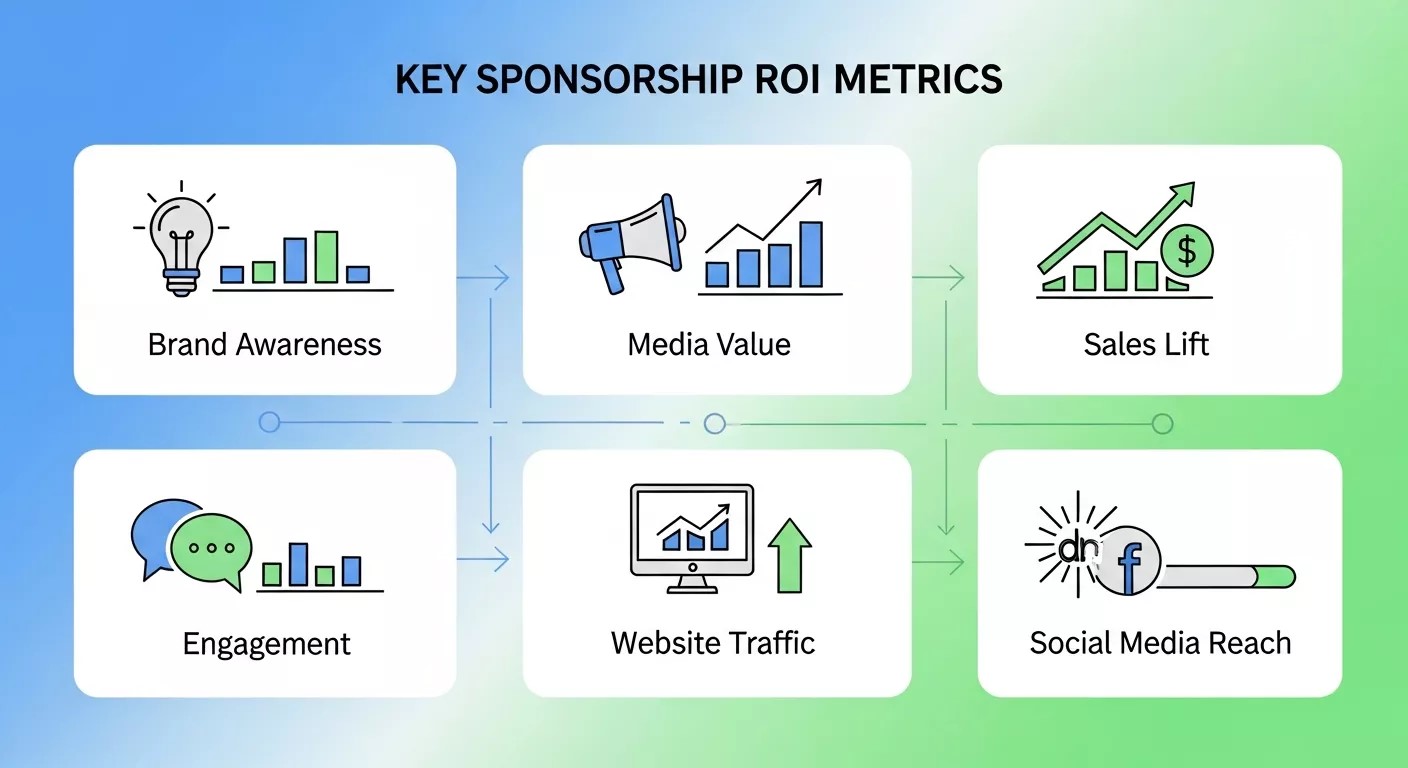
You have to have an understanding of what you’re measuring when examining sponsorship ROI. Here are the key metrics for every brand to consider:
Brand Awareness
We talked about how the whole goal of a sponsorship is to get your brand seen. Here are some key KPIs to consider when evaluating changes in awareness:
- Impressions: Count how many times products with your brand logo or message were seen throughout the event or promotion (i.e. event signage, social media posts, or TV).
- Social Media Mentions: Keep track of your brand being referred to online pre-, during and post sponsorship.
- Surveys and Polls: Ask attendees or participants directly and find out if they remember your brand.
Example: If your business sponsors an athletic event, tally how many times the event printed your company’s logo and how many social media users tagged your brand in post-event screen shots.
Audience Engagement

Another important objective of sponsorships is to reach your intended audience. Engagement metrics can tell you how well your sponsorship attract attention and interest:
- Social Interactions: Monitor likes, reposts, shares, and private messages that mention the sponsored event or activation.
- Website Traffic: Observe any increase in visits to the website during and immediately after the sponsorship.
- Event Participation: If you’re running activations (like a pop-up shop or branded contest), track information like booth engagement or contest signups.
Example: If you sponsor a music festival, for instance, you can develop an Instagram contest with a branded hashtag. Monitor the number of users who join the competition and follow your social media profiles.
Lead Generation
Sponsoring offers exactly the right possibility to convert an audience’s interest into leads. These are numbers that show you how many potential customers that you are getting into your sales funnel:
- Leads Generated: Keep track of event registrations, email opt-ins, or demo requests that originated from your sponsorship.
- QR CODE SCANS: Utilize custom QR codes printed throughout your sponsorship materials to monitor audience engagement.
- Event-Related Offers: If you’re providing special offers or sales as part of the sponsorship, track how many are redeemed.
Example: Your company is the sponsor of a marathon, and you decide to print QR codes on banners that link to a page with a special sign-up form for exclusive deals for participating in the marathon. Monitor how many people scanned the code and complementary leads were generated.
Sales Conversions
At the end of the day, sponsorship success tends to be measured by its effect on the bottom line. Consider these financial ROI measures:
- Direct Sales: Monitor sales generated by customers who specifically refer to event exposure (such as the utilization of promo codes linked to the partnership).
- Attributable Revenue: Connect website traffic or leads generated through sponsored content to sales that closed.
- Long Term Customer Value (LTCV): Compute how much value these customers have in them by investing in the sponsored activity.
Example: If your product was sponsored with a unique 20% off code, measure how much in sales came through that code during the campaign.
Media Coverage and Earned Media Value

You will usually get a little more exposure with sponsorships, as they also tend to get some media coverage. To assess this, track:
- Media Mentions: How many times does your brand show up in articles, TV coverage, or press releases related to the sponsorship?
- Earned Media Value: Calculate how much cash value your exposure is worth to your sponsorship.
Example: You sponsor a tech conference and your name makes it into articles written by several news outlets about the conference after it’s all said and done. Then put a monetary value on those mentions by comparing them to what you’d pay for advertising.
Customer Sentiments and Brand Image
Sponsorships are about more than just building awareness; they help determine how the public views your brand. These methods can be used to analyze sentiment:
- Sentiment Analysis: Use tools such as Hootsuite or Brandwatch to see how customers talk about your brand online.
- Feedback Polls: Use this to glean feedback about how the sponsorship changes attitudes about your brand among your audience.
Example: For example, if you hosted a local charity event for your community, survey attendees afterwards to see how they view your brand’s support of corporate social responsibility.
How individuals can successfully monitor sponsorship metrics
Easier Said Than Done It actually becomes easier if you have the right tools and strategy to know sponsorship ROI. Below are some tips to help you track in a disability-friendly way:
- Set Clear Goals: Ahead of initiating a sponsorship, clearly define success and the key metrics you’ll monitor.
Understanding the True Financial Worth of Sponsorships
Determining the actual worth of a sponsorship goes far beyond logo placement or brand mentions. Sponsorship Valuation involves calculating tangible and intangible benefits such as media exposure, audience relevance, and brand sentiment. Brands must consider factors like audience demographics, platform visibility, and content lifespan when assigning value. For example, a digital sponsorship with long-term content visibility may outperform a one-time physical event sponsorship. Accurate valuation also helps brands negotiate fair pricing and avoid overspending. When marketers understand sponsorship valuation deeply, they can allocate budgets more strategically and ensure that every partnership contributes measurable business impact.
- Unique Tracking Links: Generate links for tracking by a promotion code or QR-Code to identify leads and sales.
- Tap Into Technology: Deploy social listening (e.g., Sprout Social), data analytics (e.g., Google Analytics) and CRM (e.g., Salesforce) to monitor and aggregate data.
- Work with Partners: Work with event producers to gain access to attendee demographics, media impressions, and other data overtime plus.
Making Data Into Actionable Information
Tracking metrics alone isn’t quite enough to really maximize your sponsorship strategies. You want to turn the data into actionable insights:
- Benchmark Forward and Backward: Study historical (and current) views of your current sponsors to better plan for the future.
- Segment Your Outcomes: Analyses the metrics by audience type, channels or elements of campaigns for some great insight.
- Test and Learn: Leverage smaller sponsorship activations to test new ideas and scale those that work.
After coaching hundreds of clients through sponsorships…
Sponsoring sounds like a game-changer for your brand, but you also need to know what success looks like and when you can say that sponsoring is a success. From brand awareness to revenue, there are all sorts of data points to monitor and optimize. Keep improving by learning from the activity on all of your accounts, then use those insights so you can maximize the return on every campaign.
Seeking more strategies to strengthen your sponsors? Discover resources that fit your specific needs and elevate your brand.
Measuring Collaborative Brand Impact Beyond Surface Metrics
When multiple brands work together, measuring success goes beyond likes and impressions. Understanding The ROI of Multi-Brand Collaboration Campaigns requires analyzing shared audience growth, cross-brand trust, and combined conversion influence. These campaigns often generate layered value—brand lift for one partner, direct sales for another, and long-term visibility for all. Marketers should track co-branded traffic sources, assisted conversions, and engagement overlap between audiences. A key advantage of collaborative campaigns is cost-sharing, which lowers individual risk while increasing exposure. However, ROI clarity only comes when responsibilities and attribution models are clearly defined. Without structured measurement, collaboration success can be underestimated or misinterpreted.
Understanding the True Financial Worth of Sponsorships
Determining the actual worth of a sponsorship goes far beyond logo placement or brand mentions. Sponsorship Valuation involves calculating tangible and intangible benefits such as media exposure, audience relevance, and brand sentiment. Brands must consider factors like audience demographics, platform visibility, and content lifespan when assigning value. For example, a digital sponsorship with long-term content visibility may outperform a one-time physical event sponsorship. Accurate valuation also helps brands negotiate fair pricing and avoid overspending. When marketers understand sponsorship valuation deeply, they can allocate budgets more strategically and ensure that every partnership contributes measurable business impact.
Why Digital Sponsorship Models Are Accelerating
Digital-first experiences are reshaping how brands invest in partnerships. With remote audiences growing rapidly, Virtual Events Sponsorship on the Rise reflects a shift toward scalable, data-rich activations. Unlike physical events, virtual sponsorships provide precise analytics—clicks, session duration, booth visits, and content engagement. Brands gain global reach without geographic limitations, while sponsorship costs remain comparatively lower. Virtual environments also allow dynamic placements such as sponsored sessions, branded networking lounges, and interactive demos. These formats make ROI tracking easier and more transparent. As hybrid and fully virtual experiences continue evolving, digital sponsorships are becoming a core component of modern marketing strategies.
Strategic Planning for Long-Term Partnership Returns
Maximizing sponsorship returns requires planning beyond a single campaign. Brands that study The ROI of Multi-Brand Collaboration Campaigns over time often discover compounding benefits—repeat exposure, stronger audience trust, and improved partner alignment. Long-term collaborations enable shared storytelling, consistent messaging, and deeper data insights. Marketers should evaluate performance trends across campaigns, not just one-off results. This includes monitoring brand recall, engagement consistency, and cross-channel performance. Sustainable ROI comes from partnerships built on mutual value rather than short-term gains. Strategic planning ensures collaborations evolve alongside audience expectations and market conditions.
Blending Valuation Models with Digital Sponsorship Growth
As sponsorship channels diversify, brands must align valuation methods with modern formats. Insights from The Complete Guide to Sponsorship Valuation are especially useful when applied to Virtual Events Sponsorship on the Rise. Digital sponsorships allow real-time performance tracking, making valuation more accurate and adaptable. Brands can test placements, optimize messaging mid-campaign, and quickly assess cost efficiency. Combining traditional valuation frameworks with digital analytics helps marketers understand both immediate impact and long-term brand equity. This blended approach ensures sponsorship strategies remain flexible, data-driven, and aligned with evolving consumer behavior.
Frequently Asked Questions (FAQ)
What is sponsorship ROI and why is it important?
Sponsorship ROI (Return on Investment) measures how much value a brand gains compared to what it spends on sponsorship activities. It’s important because it helps brands understand whether their sponsorship efforts are driving awareness, engagement, leads, or revenue, instead of relying on assumptions or vanity metrics.
Which KPIs are most important for calculating sponsorship ROI?
Key KPIs include brand awareness (impressions, mentions), audience engagement (likes, shares, traffic), lead generation (email sign-ups, QR scans), sales conversions (promo code usage, attributable revenue), earned media value, and customer sentiment. The right KPIs depend on your campaign goals.
How do brands track sales from sponsorship campaigns?
Brands typically track sales using unique promo codes, custom landing pages, QR codes, UTM tracking links, and CRM integrations. These tools help directly connect sponsorship exposure to purchases or conversions.
Can sponsorship ROI be measured without direct sales?
Yes. Not all sponsorships aim for immediate sales. ROI can also be measured through brand lift, audience engagement, media exposure, sentiment improvement, and long-term customer value, especially for awareness-driven campaigns.
What tools help measure sponsorship performance effectively?
Popular tools include Google Analytics for traffic and conversions, social listening platforms like Hootsuite or Brand watch for sentiment and mentions, CRM tools like Salesforce for lead tracking, and event analytics platforms for impressions and attendee data.
How long should brands wait to evaluate sponsorship ROI?
While some metrics like engagement and traffic can be tracked in real time, brands should evaluate sponsorship ROI both immediately after the campaign and over time. Long-term metrics such as customer lifetime value and brand perception often take weeks or months to fully reflect impact.
What are common mistakes brands make when measuring sponsorship ROI?
Common mistakes include not setting clear goals before the sponsorship, relying only on impressions, ignoring attribution models, failing to track post-event conversions, and not collaborating with partners to access accurate data.
How can brands improve ROI in future sponsorships?
Brands can improve ROI by setting clear KPIs upfront, choosing sponsorships aligned with their target audience, testing smaller activations, using data-driven insights to optimize campaigns, and focusing on long-term partnerships rather than one-off deals.