Wondering who manages brand partnerships? You are not alone. Let us explore exactly how marketing handle sponsorships to drive growth, boost visibility, and build lasting corporate relationships.
This guide explains the crucial intersection between marketing teams and sponsorship deals. You will learn how marketers select partners, negotiate terms, and activate campaigns. Discover actionable strategies, expert insights, and common pitfalls to ensure your next sponsorship investment delivers measurable ROI.
The Strategic Role of Marketing in Sponsorship Management

When a company decides to sponsor an event, a sports team, or a charity, people often wonder which department actually manages the relationship. The short answer is that marketing teams usually take the reins. Sponsorships are not just philanthropic donations; they are highly strategic business investments designed to generate brand awareness, foster community goodwill, and ultimately drive revenue.
Because the primary goals of a sponsorship align directly with standard marketing objectives, it makes perfect sense for marketing professionals to lead the charge. They understand the target audience, the brand voice, and the channels necessary to amplify the partnership. By treating a sponsorship as a core component of the overall promotional mix, companies ensure that their investment works harmoniously with other initiatives like digital marketing campaigns and public relations strategies.
Marketing departments possess the analytical tools and creative skills required to turn a simple logo placement into a dynamic, multi-channel campaign. They look beyond the basic transactional elements of the deal and focus on activation—the process of bringing the sponsorship to life for the consumer. This involves creating engaging content, hosting interactive experiences, and measuring the impact of the partnership on brand equity.
Core Responsibilities of the Marketing Team
To fully understand the mechanics of this process, we must break down the specific duties that marketing professionals assume when managing these partnerships.
Partner Selection and Audience Alignment
The first major responsibility is identifying the right opportunities. A marketing team will conduct extensive research to find events, organizations, or individuals that share a similar target demographic. If a software company wants to reach young professionals, they might sponsor a tech conference rather than a local baking competition. Marketers analyze audience demographics, psychographics, and purchasing behaviors to ensure perfect alignment.
Contract Negotiation and Asset Management
While legal departments review the binding terms of a contract, marketers negotiate the specific assets included in the sponsorship package. They advocate for prime logo placement, speaking opportunities, VIP access for clients, and digital integration. They know exactly what assets hold the most value for their specific customer acquisition strategies.
Campaign Activation and Promotion
A sponsorship is only as valuable as the activation behind it. Marketing teams build comprehensive campaigns around the partnership. This might involve social media contests, dedicated landing pages, email newsletters, and experiential marketing activations on-site. The goal is to maximize the visibility of the partnership before, during, and after the actual event.
Types of Sponsorships Managed by Marketing
Sponsorships come in various forms, and a versatile marketing department must know how to handle each unique type.
Financial Sponsorships
This is the most traditional format, where a company pays a set amount of money in exchange for promotional benefits. Marketers must carefully budget for these opportunities, ensuring the financial outlay justifies the expected return on investment. They track metrics like cost-per-impression and overall brand lift.
In-Kind Sponsorships
Instead of cash, a company might provide goods or services. A beverage company might supply drinks for a marathon, or a technology firm might provide laptops for a hackathon. Marketing teams must manage the logistics of delivering these goods while ensuring the brand receives adequate recognition for the contribution. This often ties into broader product marketing initiatives.
Media Sponsorships
In this arrangement, a company covers the cost of media space or provides media exposure for an event. A local television station might act as a media sponsor for a community festival. Marketers leverage these deals to create synergistic relationships that benefit both the media outlet and the event organizers, expanding the reach of all parties involved.
Promotional Partnerships
These involve collaborating with influencers, bloggers, or complementary brands. Marketers create co-branded content and leverage each other’s audiences. This type of sponsorship requires excellent relationship management and a deep understanding of social media marketing trends.
Step-by-Step Guide to Managing a Sponsorship

Executing a successful sponsorship requires a methodical approach. Follow these steps to ensure your marketing team maximizes the value of every partnership.
Step 1: Define Clear Objectives
Before signing any agreements, outline exactly what you want to achieve. Are you launching a new product? Trying to break into a new regional market? Looking to boost employee morale? Documenting clear, measurable goals will guide every subsequent decision.
Step 2: Establish a Budget
Determine how much you can afford to spend, but remember to look beyond the rights fee. A common rule of thumb is to spend at least one to two dollars on activation for every dollar spent on the sponsorship itself. If you spend $10,000 to sponsor a trade show, allocate another $10,000 to $20,000 for booth design, promotional materials, and staff travel.
Step 3: Source and Vet Opportunities
Actively search for properties that align with your objectives. Use industry databases, attend networking events, and monitor competitor activities. Create a scoring matrix to evaluate potential partners based on audience overlap, brand reputation, and the value of the assets offered.
Step 4: Negotiate and Finalize the Agreement
Work collaboratively with the property to craft a mutually beneficial agreement. Do not be afraid to ask for customized assets that serve your specific marketing goals. Once you agree on the terms, ensure your legal team reviews the contract to protect your company’s interests.
Step 5: Develop an Activation Plan
Gather your marketing team to brainstorm creative ways to leverage the sponsorship. Assign specific tasks to your public relations, social media, and content marketing specialists. Build a detailed timeline that covers pre-event promotion, on-site execution, and post-event follow-up.
Step 6: Measure and Evaluate
After the sponsorship concludes, gather data to assess its effectiveness. Compare the results against the objectives you established in step one. Create a comprehensive report that details the return on investment and provides recommendations for future sponsorships.
Comparing Sponsorships vs. Traditional Advertising
Many businesses struggle to understand the difference between sponsoring an entity and simply buying advertising space. The following table breaks down the key distinctions.
|
Feature |
Traditional Advertising |
Sponsorship Marketing |
|---|---|---|
|
Primary Goal |
Direct sales and immediate product promotion |
Brand affinity, relationship building, and goodwill |
|
Communication Style |
One-way communication (brand talking to consumer) |
Two-way engagement and experiential interaction |
|
Audience Reception |
Often viewed as interruptive or distracting |
Generally welcomed as supportive of an event they love |
|
Flexibility |
Highly controlled messaging and placement |
Dynamic, requiring adaptation to live events and partners |
|
Measurement |
Direct attribution (clicks, conversions, impressions) |
Complex attribution (brand lift, sentiment, long-term loyalty) |
This table illustrates why marketing departments must treat sponsorships differently than standard media buys. A sponsorship requires a more nuanced approach focused on long-term brand building and authentic community integration.
Expert Insights and Pro Tips for Sponsorship Success
To elevate your sponsorship strategy, consider these advanced tactics used by industry leaders.
- Focus on Storytelling: Do not just slap your logo on a banner. Tell a compelling story about why your brand supports this specific event or cause. Authenticity resonates deeply with modern consumers.
- Leverage Employee Advocacy: Involve your staff in the sponsorship. Offer them VIP tickets, encourage them to volunteer, or have them host the company booth. Employees who feel connected to the company’s community initiatives become powerful brand ambassadors.
- Create Exclusive Content: Use the sponsorship to generate unique content for your digital channels. Interview guest speakers, stream live behind-the-scenes footage, or host a podcast episode live from the venue. This fuels your content marketing engine for months.
- Demand Category Exclusivity: When negotiating, always ask for exclusivity within your industry. You do not want to sponsor a major industry event only to find your direct competitor has a larger booth right next to yours.
Common Mistakes to Avoid in Sponsorship Marketing
Even experienced marketing teams can fall into traps that diminish the value of their sponsorships. Avoid these frequent missteps.
Failing to Budget for Activation
This is the most common and devastating mistake. Companies spend their entire budget securing the rights to a sponsorship and leave nothing to promote it. An unactivated sponsorship is essentially an expensive donation. Always reserve funds to bring the partnership to life.
Ignoring Audience Data
Sponsoring an event simply because the CEO likes the sport or the charity is a recipe for failure. Marketing decisions must be driven by data. If the event attendees do not match your target customer profile, the investment will not yield a positive return.
Neglecting Lead Capture
Events and sponsorships offer incredible opportunities to gather first-party data. If you set up a booth without a mechanism to collect email addresses or schedule follow-up meetings, you are leaving money on the table. Offer a valuable giveaway or contest in exchange for contact information.
Treating It Like a Short-Term Tactic
Building brand equity takes time. A single sponsorship rarely transforms a company’s market position overnight. Approach sponsorships as long-term strategic partnerships. Multi-year agreements often yield better results as the audience becomes more familiar with your brand’s commitment to the property.
How to Measure Sponsorship ROI
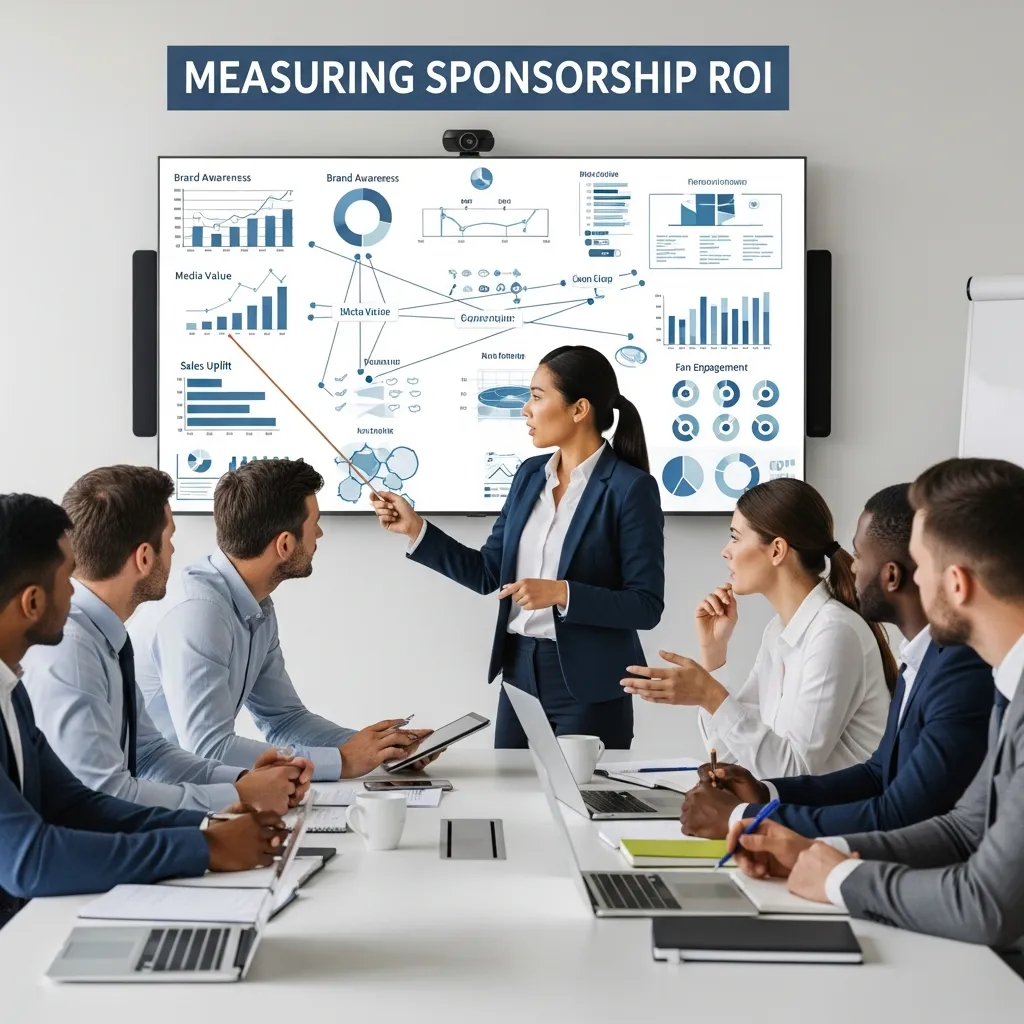
Determining the return on investment for sponsorships is notoriously challenging, but it is entirely possible with the right framework. Marketers use a combination of qualitative and quantitative metrics to paint a complete picture of success.
Trackable Digital Metrics
Use custom URLs, unique promo codes, and dedicated landing pages for every sponsorship. This allows you to track exactly how much website traffic and how many direct sales originated from the partnership. Monitor your social media channels for increases in followers, mentions, and engagement rates during the sponsorship period.
Brand Sentiment and Lift
Conduct surveys before and after the sponsorship to measure changes in brand awareness and consumer perception. Ask attendees if they are more likely to purchase from your company because of your support for the event. Positive shifts in sentiment are strong indicators of a successful partnership.
Media Equivalency Value
Calculate the value of the media exposure you received. If your logo appeared on a television broadcast for a total of two minutes, determine how much it would have cost to purchase a two-minute commercial on that same network. While not a perfect measure of sales, it helps quantify the visibility gained.
The Future of Brand Partnerships
The landscape of brand partnerships is constantly evolving. As digital technology advances, marketing teams have new tools to activate and measure their sponsorships.
Virtual and hybrid events have opened up global sponsorship opportunities that were previously restricted by geography. Brands can now sponsor digital summits and reach audiences across the world. Additionally, the rise of data analytics allows for hyper-targeted sponsorships. Brands can analyze complex datasets to identify micro-influencers and niche communities that offer massive engagement rates.
As we move forward, successful marketing departments will continue to blend data-driven decision-making with creative storytelling to unlock the full potential of their sponsorship portfolios. By aligning partnerships closely with overall business objectives, marketers can transform standard event sponsorships into powerful engines for corporate growth.
Ultimately, having your marketing handle sponsorships ensures these partnerships align perfectly with your broader brand goals. By integrating sponsorships into your core promotional strategy, you maximize audience engagement and return on investment. Ready to elevate your brand? Start evaluating potential sponsorship opportunities today and watch your corporate reach multiply.
FAQs
1. Why does the marketing department usually manage sponsorships?
Marketing departments manage sponsorships because these partnerships are strategic tools designed to increase brand awareness, engage target audiences, and drive revenue. Marketers possess the necessary skills in audience analysis, brand positioning, and campaign activation to ensure the sponsorship aligns with overall business goals and delivers a measurable return on investment.
2. What is the difference between a sponsorship and a donation?
A donation is a philanthropic gift given with no expectation of commercial return. A sponsorship is a strategic business transaction where a company provides funds, goods, or services in exchange for promotional benefits, brand visibility, and access to a specific audience. Sponsorships require active management and ROI tracking.
3. How do marketers choose which events or organizations to sponsor?
Marketers choose sponsorships based on audience alignment. They analyze the demographics and psychographics of the event’s attendees to ensure they match the brand’s target customer profile. They also consider the organization’s reputation, the value of the promotional assets offered, and the potential for creative campaign activation.
4. What does “sponsorship activation” mean?
Activation refers to the marketing activities and campaigns executed to promote and leverage the sponsorship. It goes beyond simply having a logo on a banner. Activation includes social media contests, interactive booths, experiential marketing, and exclusive content creation designed to engage the audience and bring the partnership to life.
5. How much should a company budget for sponsorship activation?
Industry experts generally recommend spending a minimum of one to two dollars on activation for every dollar spent on the sponsorship rights fee. For example, if the rights fee is $20,000, you should budget an additional $20,000 to $40,000 for promotional materials, staff travel, digital campaigns, and on-site experiences.
6. Can small businesses benefit from sponsorship marketing?
Absolutely. Small businesses can sponsor local community events, regional sports teams, or niche industry podcasts. These localized sponsorships are often highly affordable and provide excellent opportunities to build brand loyalty, connect with the local community, and generate targeted leads without the massive budget required for global events.
7. What are the most common mistakes made in sponsorship marketing?
Common mistakes include failing to budget for activation, choosing sponsorships based on personal preference rather than data, neglecting to capture leads or contact information at events, and failing to establish clear, measurable objectives before signing the contract.
8. How do marketing teams measure the success of a sponsorship?
Success is measured using a mix of metrics, including website traffic driven by custom URLs, usage of unique promo codes, social media engagement, and media equivalency value. Marketers also use post-event surveys to measure qualitative data like brand sentiment, awareness lift, and purchase intent.
9. What is an in-kind sponsorship?
An in-kind sponsorship occurs when a company provides goods or services instead of direct financial support. For example, a catering company might provide free meals for a charity gala in exchange for prominent branding and access to the event’s affluent attendee list.
10. Why is category exclusivity important in a sponsorship agreement?
Category exclusivity ensures that your direct competitors cannot sponsor the same event or property. This is crucial because it prevents your competitors from diluting your brand message and stealing attention from your target audience. Marketers should always negotiate for exclusivity within their specific industry sector.