
Consumers demand eco-conscious choices. Sustainable brand partnerships offer a powerful way to meet these demands, allowing companies to unite their resources, innovate faster, and drive meaningful environmental progress together.
This comprehensive guide explores how sustainable brand partnerships generate mutual growth. You will discover actionable strategies, learn from industry examples, understand common pitfalls, and gain expert insights to build powerful, eco-friendly alliances that benefit both your bottom line and the planet.
The Rising Importance of Sustainable Brand Partnerships
Sustainable brand partnerships represent a strategic alignment between two or more companies committed to environmental and social responsibility. These alliances go beyond simple co-marketing. They integrate shared ecological goals into core business operations. By pooling resources, brands can tackle massive global challenges like climate change, resource depletion, and excessive waste.
When you engage in sustainable brand partnerships, you signal to your audience that your commitment to the planet goes beyond mere words. You demonstrate a willingness to invest in real solutions. This shared commitment amplifies your message and expands your reach. Consumers actively seek out brands that align with their personal values. When they see their favorite companies working together for a good cause, their loyalty deepens.
Furthermore, sustainable brand partnerships reduce the financial burden of research and development. Developing innovative, eco-friendly materials or optimizing Eco-Friendly Supply Chains requires significant capital. When companies share these costs, they accelerate the pace of innovation. This collaborative approach leads to better products, reduced waste, and a stronger competitive edge in the marketplace.
Building Trust Through Collaboration

Trust is the ultimate currency in modern business. Consumers are increasingly skeptical of greenwashing. They want proof that companies are taking genuine action. Sustainable brand partnerships provide this proof. When two reputable organizations publicly commit to a shared environmental goal, it validates their individual efforts. The transparency required to make these collaborations work naturally builds trust with the public.
By engaging in sustainable brand partnerships, companies can also influence their respective industries. A successful collaboration sets a new standard. It shows competitors that sustainability and profitability can coexist. This ripple effect encourages other businesses to adopt similar practices, ultimately driving systemic change across entire sectors.
Core Elements of Successful Sustainable Brand Partnerships
Creating impactful sustainable brand partnerships requires more than just a shared press release. It demands deep integration and a clear understanding of mutual objectives. Here are the core elements that define successful eco-friendly collaborations.
Shared Values and Vision
The foundation of all sustainable brand partnerships is a shared vision for the future. Both companies must prioritize similar environmental or social goals. If one company focuses heavily on reducing carbon emissions while the other prioritizes fair labor practices, they can certainly collaborate, but they must find a specific intersection where their values align perfectly. A misaligned vision will quickly lead to friction and disjointed messaging.
Transparent Communication
Open and honest communication ensures that sustainable brand partnerships thrive. Both parties must share data, insights, and even operational challenges. Transparency builds mutual respect and allows partners to solve problems collaboratively. If a supply chain issue arises, addressing it openly prevents the partnership from fracturing and ensures that the final product remains truly sustainable.
Measurable Impact
To prove the value of sustainable brand partnerships, companies must track their progress. Setting clear, measurable goals at the outset is crucial. Whether the objective is to divert a specific tonnage of waste from landfills, reduce water usage by a certain percentage, or plant a million trees, having quantifiable metrics ensures accountability. This data also provides powerful material for Green Marketing Strategies, allowing both brands to share their tangible success with their audiences.
Step-by-Step Guide to Building Sustainable Brand Partnerships
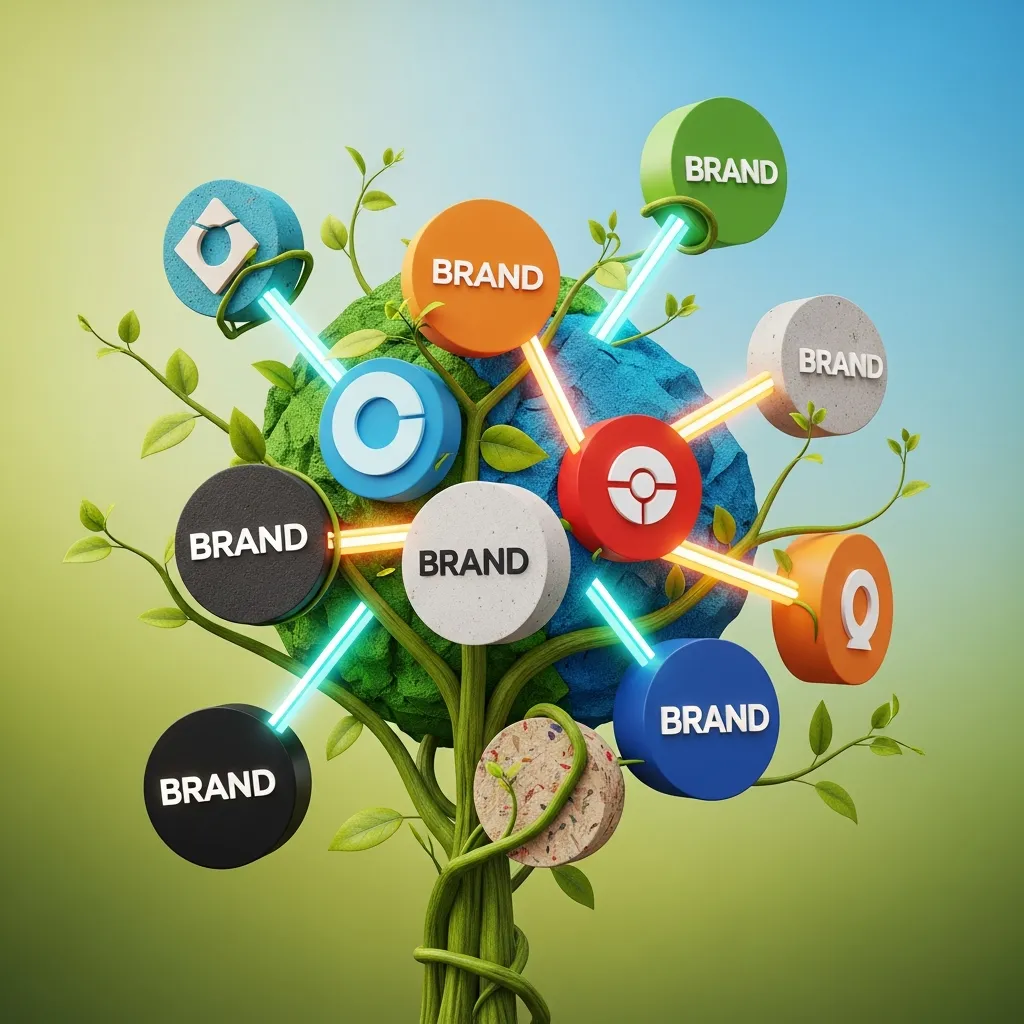
Launching effective sustainable brand partnerships requires a methodical approach. Follow these steps to ensure your collaboration delivers maximum value and environmental impact.
Step 1: Identify Your Sustainability Goals
Before seeking a partner, you must understand your own objectives. What specific environmental issues does your company want to address? Are you looking to implement Circular Economy Models? Do you want to reduce plastic packaging? Defining your goals will help you identify partners who share your ambitions and possess complementary strengths.
Step 2: Research Potential Partners
Look for companies that align with your values but operate in different, yet complementary, niches. Analyze their past sustainability initiatives. Read their annual impact reports. Ensure they have a proven track record of genuine environmental commitment. The best sustainable brand partnerships often involve companies that can offer resources, technology, or audience access that you currently lack.
Step 3: Propose a Mutually Beneficial Concept
When reaching out to a potential partner, clearly articulate the mutual benefits. Explain how the collaboration will drive growth for both brands while achieving a specific environmental outcome. Pitch a pilot project to test the waters. A limited-edition product or a joint awareness campaign is a great way to start sustainable brand partnerships without committing to a massive, long-term operational overhaul immediately.
Step 4: Define Roles and Responsibilities
Once both parties agree to collaborate, establish clear guidelines. Who will handle manufacturing? Who manages the marketing rollout? How will costs and profits be split? Documenting these details prevents misunderstandings and ensures that the project moves forward smoothly. Clear roles are the backbone of all successful sustainable brand partnerships.
Step 5: Execute and Measure
Launch your collaborative project and monitor its performance closely. Track both commercial metrics, like sales and website traffic, and sustainability metrics, like carbon offset or materials saved. Use this data to refine your approach. Sustainable brand partnerships are dynamic; they require ongoing optimization to achieve the best possible results.
Expert Insights for Maximum Impact
To elevate your sustainable brand partnerships, consider these expert strategies that industry leaders use to maximize their impact.
First, focus on authenticity. Consumers can spot a marketing gimmick instantly. Your collaboration must make logical sense and deliver real environmental benefits. If a fast-food chain partners with an eco-friendly clothing brand just to sell branded merchandise, the public might view it as inauthentic. However, if that same fast-food chain partners with a regenerative agriculture organization to source better ingredients, the partnership feels genuine and impactful.
Second, leverage your combined audiences. Sustainable brand partnerships offer a unique opportunity to cross-pollinate customer bases. Co-create content that educates both audiences about the environmental issue you are tackling. Host joint webinars, create collaborative social media campaigns, and share each other’s email lists. This amplified reach is a primary driver of growth in sustainable brand partnerships.
Third, embrace radical transparency. Share the challenges you face during the collaboration. If you encounter difficulties sourcing a specific sustainable material, tell your audience about it. Explain how you and your partner worked together to find a solution. This level of honesty humanizes your brands and deepens consumer trust.
Common Mistakes to Avoid
While sustainable brand partnerships offer incredible benefits, they also carry risks. Avoid these common pitfalls to ensure your collaboration succeeds.
One major mistake is partnering with a company that has a poor environmental track record. This can result in guilt by association, damaging your brand’s reputation. Always conduct thorough due diligence before entering into sustainable brand partnerships. Investigate their supply chain, labor practices, and past environmental controversies.
Another mistake is focusing solely on the marketing benefits while neglecting the actual environmental impact. If your partnership does not result in a tangible, positive change, it is merely greenwashing. Sustainable brand partnerships must prioritize the planet just as much as profits. Ensure your joint initiatives have a measurable ecological benefit.
Finally, avoid vague messaging. When promoting sustainable brand partnerships, be specific about what you are achieving together. Instead of saying, “We are working together for a greener future,” say, “Our partnership has removed 10,000 pounds of plastic from the ocean.” Specificity builds credibility and proves the value of your collaboration.
Analyzing the ROI of Sustainable Brand Partnerships
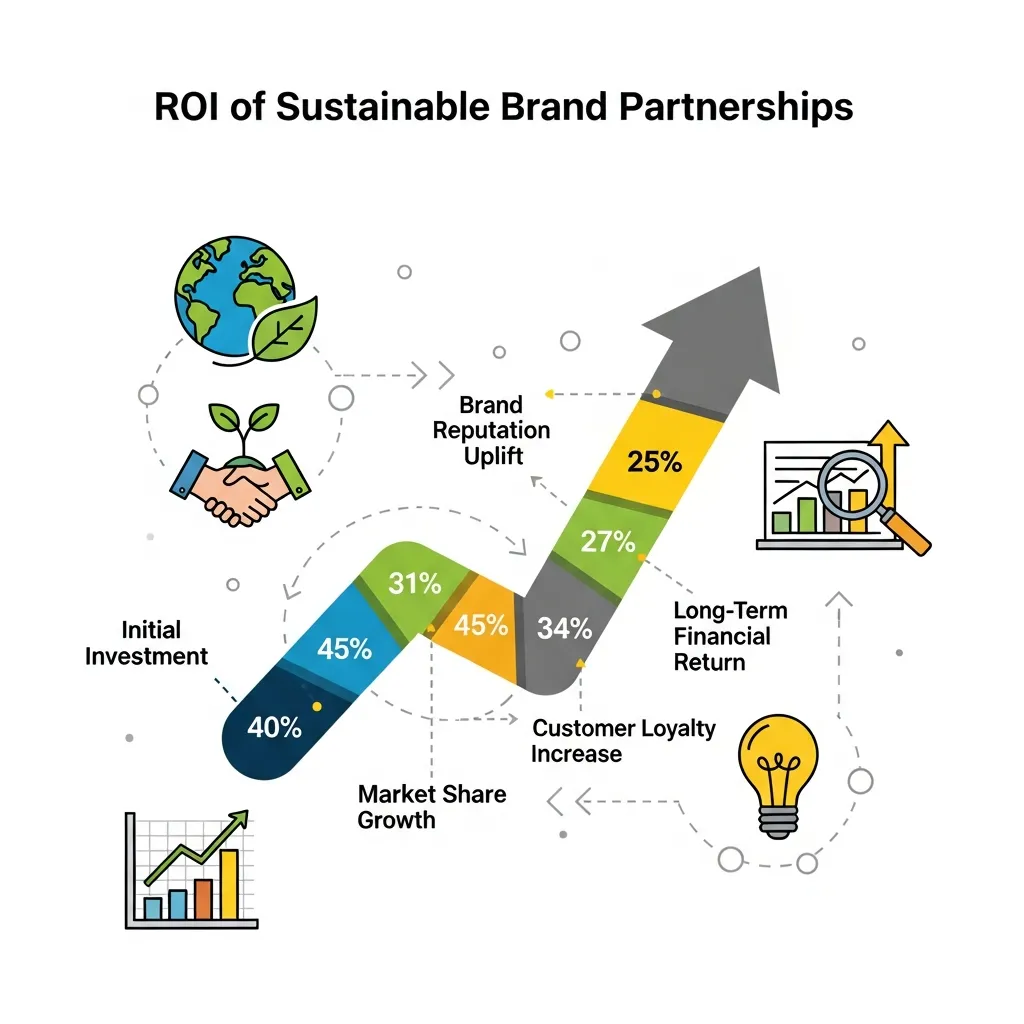
Measuring the return on investment for sustainable brand partnerships requires a multifaceted approach. You must look beyond immediate sales figures and consider long-term brand equity and operational savings.
From a financial perspective, evaluate the cost savings achieved through shared resources. Did the partnership reduce your research and development expenses? Did joint marketing efforts lower your customer acquisition costs? These savings directly improve your bottom line. Additionally, monitor the sales generated by collaborative products or services.
From a brand perspective, assess the impact on consumer perception. Conduct surveys to measure changes in brand awareness and loyalty. Track media coverage and social media sentiment related to your sustainable brand partnerships. Positive PR and enhanced brand reputation are valuable assets that drive long-term growth.
Finally, evaluate the environmental ROI. Did the partnership achieve its ecological goals? Quantifying the environmental impact provides crucial data for your Corporate Social Responsibility reporting and strengthens your brand’s narrative.
Comparison: Traditional vs. Sustainable Brand Partnerships
Understanding the differences between conventional collaborations and eco-focused alliances helps highlight the unique value of the latter.
|
Feature |
Traditional Partnerships |
Sustainable Brand Partnerships |
|---|---|---|
|
Primary Goal |
Maximize immediate revenue and reach |
Balance revenue growth with environmental impact |
|
Value Alignment |
Focuses on complementary demographics |
Requires deep alignment on ecological and social values |
|
Transparency |
Often keeps operational details private |
Demands radical transparency and open data sharing |
|
Innovation |
Focuses on marketing and product features |
Focuses on eco-friendly materials and supply chain efficiency |
|
Consumer Perception |
Seen as standard business practice |
Viewed as a commitment to global betterment and ethics |
|
Metrics for Success |
Sales, leads, and market share |
Carbon reduction, waste diversion, and ethical sourcing alongside profit |
This table illustrates how sustainable brand partnerships require a deeper level of commitment and a broader definition of success compared to traditional business collaborations.
Real-World Examples of Innovation
Examining successful sustainable brand partnerships provides valuable inspiration for your own initiatives. Many industry leaders have proven that collaboration accelerates environmental progress.
Consider the footwear industry, where competing brands have joined forces to develop zero-carbon shoes. By sharing proprietary research on sustainable materials and low-emission manufacturing processes, these companies achieved a breakthrough that would have taken years to accomplish individually. This type of collaboration demonstrates the true power of sustainable brand partnerships.
In the food and beverage sector, large corporations have partnered with specialized agricultural startups to promote regenerative farming. The large corporations provide funding and a massive market for the crops, while the startups provide the expertise needed to restore soil health and sequester carbon. These sustainable brand partnerships create a resilient supply chain and deliver healthier products to consumers.
Technology companies also engage in sustainable brand partnerships by teaming up with environmental nonprofits. The tech firms provide data analytics and artificial intelligence tools to help the nonprofits track deforestation, monitor wildlife populations, or optimize renewable energy grids. These alliances leverage technological innovation to solve pressing ecological challenges.
Enhancing Internal Systems for Collaboration
To engage in effective sustainable brand partnerships, your internal operations must be ready to support collaborative efforts. You cannot build a green alliance if your own house is not in order.
Start by educating your team about the importance of sustainability. Ensure that employees across all departments understand your environmental goals and how sustainable brand partnerships fit into your broader business strategy. This internal alignment empowers your team to identify collaborative opportunities and execute joint projects effectively.
Next, upgrade your data tracking systems. You need accurate data to measure the impact of your sustainable brand partnerships and share progress with your collaborators. Implement software that tracks energy consumption, waste generation, and supply chain emissions. This data will be invaluable when establishing baselines and reporting on the success of your joint initiatives.
Finally, cultivate a culture of flexibility and open-mindedness. Sustainable brand partnerships often require companies to step outside their comfort zones and try new ways of doing business. Encourage your team to embrace innovation and view challenges as opportunities for collaborative problem-solving.
The Future of Collaborative Growth
The business landscape is shifting rapidly. Consumers, investors, and regulators are all demanding greater environmental accountability. In this climate, sustainable brand partnerships are not just a marketing tactic; they are a survival strategy.
Companies that try to tackle sustainability challenges alone will struggle to keep pace. The scale of the environmental crisis requires collective action. By embracing sustainable brand partnerships, businesses can pool their knowledge, share the financial risks of innovation, and achieve a scale of impact that is impossible to reach independently.
As you look to the future, prioritize building a network of like-minded partners. Seek out companies that challenge you to be better and offer capabilities that complement your own. By committing to sustainable brand partnerships, you position your company as a leader in the transition to a greener, more resilient global economy. The businesses that collaborate today will be the ones that thrive tomorrow.
Conclusion
Sustainable brand partnerships represent the future of intelligent business growth. By aligning with companies that share your environmental values, you can reduce costs, accelerate innovation, and build profound trust with your audience. Embrace transparency, set measurable goals, and avoid greenwashing to ensure your collaborations create lasting positive impacts. Start building your sustainable brand partnerships today to secure a greener, more profitable tomorrow.
Frequently Asked Questions
What are sustainable brand partnerships?
Sustainable brand partnerships are strategic collaborations between two or more companies that share a commitment to environmental or social responsibility. These alliances aim to achieve specific ecological goals while simultaneously driving business growth and enhancing brand reputation.
Why are sustainable brand partnerships important for business growth?
They allow companies to pool resources, share research and development costs, and reach new audiences. By demonstrating a genuine commitment to the environment, businesses build deeper trust with consumers, which translates into increased loyalty and long-term financial growth.
How do you find the right company for sustainable brand partnerships?
Look for brands that share your core environmental values but operate in complementary niches. Research their past sustainability initiatives, verify their supply chain practices, and ensure they have a solid reputation. The best partners offer resources or audience access that you currently lack.
What is the biggest mistake to avoid in sustainable brand partnerships?
The most critical mistake is greenwashing—focusing heavily on the marketing benefits without delivering a tangible environmental impact. Partnering with a company that has a poor ecological track record can also severely damage your brand’s reputation and consumer trust.
How do you measure the success of sustainable brand partnerships?
Success must be measured using both commercial and environmental metrics. Track financial data like joint sales and customer acquisition costs, while simultaneously measuring ecological impacts such as carbon emissions reduced, waste diverted, or sustainable materials sourced.
Can small businesses engage in sustainable brand partnerships?
Absolutely. Small businesses can partner with local eco-friendly suppliers, collaborate on community clean-up initiatives, or co-create sustainable products with other local artisans. These grassroots partnerships often build strong community ties and local brand loyalty.
How do sustainable brand partnerships affect consumer perception?
Consumers increasingly favor brands that take active steps to protect the environment. When done authentically, these partnerships signal that a company prioritizes the planet alongside profit, significantly enhancing brand image, trust, and customer loyalty.
What role does transparency play in sustainable brand partnerships?
Transparency is vital. Both partners must openly share data, operational challenges, and progress reports. Honest communication prevents friction between partners and proves to the public that the environmental claims associated with the partnership are genuine and verifiable.
How do sustainable brand partnerships drive innovation?
By sharing financial resources and proprietary research, partnering companies can take bigger risks and develop new eco-friendly technologies faster. This collaborative problem-solving leads to innovative materials, efficient supply chains, and better product designs that might be too costly to develop alone.
Are sustainable brand partnerships just a marketing trend?
No, they are a fundamental shift in how business operates. As global environmental challenges intensify and consumer demands for eco-conscious products grow, collaborative sustainability efforts are becoming a necessary strategy for long-term business resilience and market relevance.